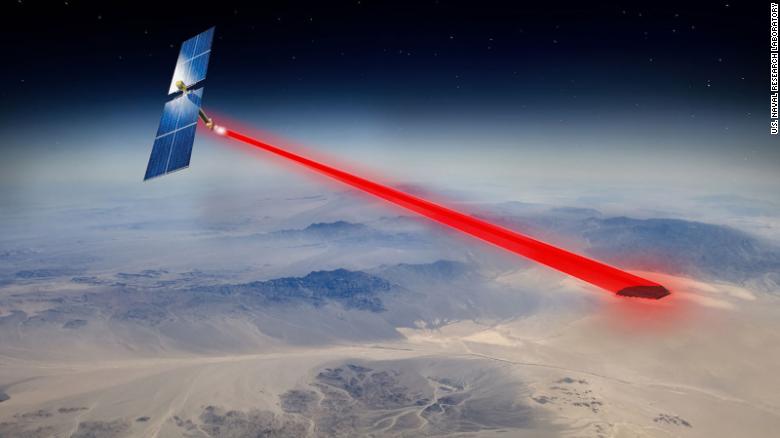
Space Solar Power represents a groundbreaking frontier in sustainable energy, offering a revolutionary solution for global electricity supply. Recent advancements, spearheaded by the Pentagon’s cutting-edge research, highlight the immense potential of sending electricity from space to Earth. This innovative technology could transform how we generate and distribute power, providing crucial energy grid resilience and contributing to a future of clean energy solutions. By harnessing the sun’s unfiltered energy beyond our atmosphere, space-based solar energy promises consistent, powerful, and globally transmissible electricity, setting the stage for significant benefits in sustainable development and disaster relief efforts worldwide.
Scientists working for the Pentagon have successfully conducted tests on a solar panel prototype in space, approximately the size of a pizza box. This Photovoltaic Radiofrequency Antenna Module (PRAM) is designed as a precursor to a sophisticated future system capable of beaming electricity from orbit to any location on Earth. The PRAM was initially launched in May 2020 aboard the Pentagon’s X-37B unmanned drone. This advanced drone orbits Earth every 90 minutes, allowing the PRAM to efficiently harness sunlight and convert it into electrical energy.
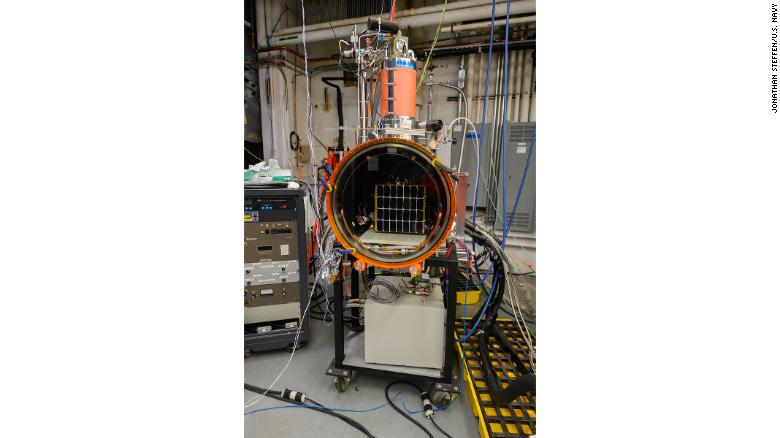
The Photovoltaic Direct Current to Radio Frequency Antenna Module (PRAM) sits inside thermal vacuum chamber during testing at the US Naval Research Laboratory in Washington, DC.
The panel’s design capitalizes on the unique conditions of space, where sunlight does not traverse the Earth’s atmosphere. This atmospheric absence means the light retains the full energy of its blue waves, making it significantly more potent than the solar radiation reaching our planet’s surface. As Paul Jaffe, a co-developer of the project, explained, “We’re getting a ton of extra sunlight in space just because of that.” The diffusion of blue light upon atmospheric entry is also why our sky appears blue.
Latest experiments confirm the 12×12-inch panel’s capability to generate approximately 10 watts of energy for transmission, Jaffe informed CNN. This output is sufficient to power a tablet computer. The long-term vision for this energy beaming technology involves deploying an array of dozens of such panels. If scaled up successfully, this innovative approach could revolutionize both how future electricity generation occurs and how power is distributed, especially to remote corners of the globe. Jaffe also noted its potential to contribute significantly to Earth’s largest energy grid networks.
“Some visions have space solar matching or exceeding the largest power plants today — multiple gigawatts — so enough for a city,” Jaffe elaborated, underscoring the immense potential of this project. While the unit has not yet directly sent power back to Earth, the fundamental technology for such microwave power transmission has already been proven. Should the project evolve into vast, kilometer-wide space solar antennae, it could transmit microwaves that would then be converted into fuel-free electricity, accessible anywhere on the planet with instantaneous delivery.
Jaffe emphasized the key advantage of solar power satellites over other energy sources: “The unique advantage the solar power satellites have over any other source of power is this global transmissibility. You can send power to Chicago and a fraction of a second later, if you needed, send it instead to London or Brasilia.” This global power distribution capability highlights the transformative impact of space solar power.
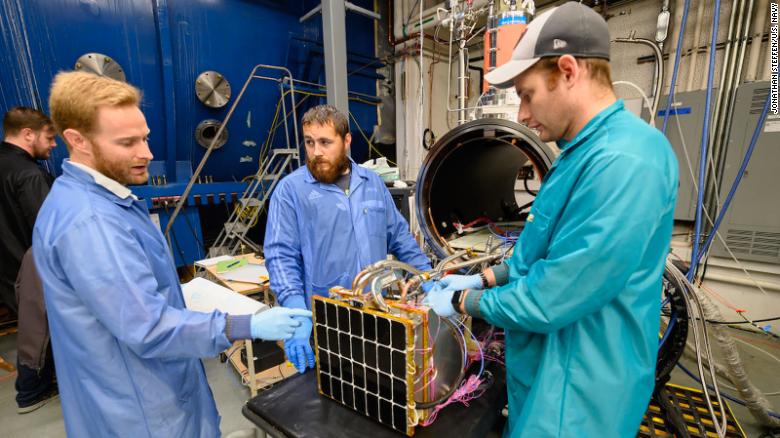
Chris Depuma (left), gives guidance on the PRAM in Washington, DC, on October 10, 2019.
However, a critical factor for the widespread adoption of space solar power, as Jaffe pointed out, is economic viability. “Building hardware for space is expensive,” he stated, adding that these costs have, in the last decade, finally begun to decrease. Despite the high initial investment, building in space offers distinct advantages. “On Earth, we have this pesky gravity, which is helpful in that it keeps things in place, but is a problem when you start to build very large things, as they have to support their own weight,” Jaffe explained. The mystery surrounding the US X-37B space plane’s mission makes the PRAM experiment one of the few publicly known details about its purpose. In January, Jaffe and PRAM co-leader Chris DePuma published the initial findings of their experiments in the IEEE Journal of Microwaves, confirming that “the experiment is working,” according to Jaffe. The project has received funding and development support from the Pentagon, the Operational Energy Capability Improvement Fund (OECIF), and the US Naval Research Laboratory in Washington, DC.
A Solution During Natural Disasters
The operational temperature of the PRAM is crucial for its efficiency. Colder electronics generally perform more effectively, with their power generation capabilities diminishing as temperatures rise. The X-37B’s low-Earth orbit means the PRAM spends approximately half of its 90-minute loop in darkness and, consequently, in a colder environment. A future, larger version of the PRAM might operate in a geosynchronous orbit, where a single loop takes about a day. In such an orbit, the device would remain mostly in direct sunlight, traveling much further from Earth. The current experiment utilized heaters to maintain the PRAM at a constant, warm temperature to demonstrate its potential efficiency if positioned 36,000 kilometers from Earth. The experiment was successful, proving its effectiveness. “The next logical step is to scale it up to a larger area that collects more sunlight, that converts more into microwaves,” Jaffe commented, emphasizing the path towards harnessing greater amounts of space solar energy.
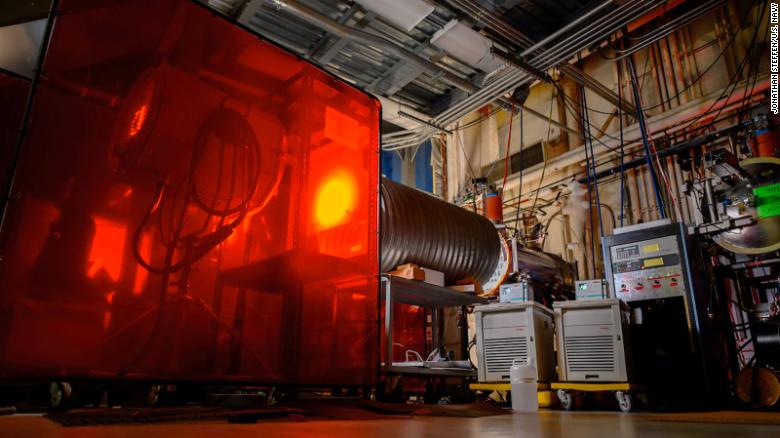
The thermal vacuum chamber allowing the PRAM to be tested in space-like conditions at the lab on October 9, 2019.
Beyond scaling up, scientists must validate the process of sending energy back to Earth. The panels would precisely direct the microwaves to their intended recipients, preventing accidental misfires, through a technique known as “retro-directive beam control.” This method involves a pilot signal sent from the receiving antenna on Earth up to the panels in space. Microwave beams would only be transmitted once this pilot signal is received, ensuring the ground receiver is in place and ready. These microwaves, easily converted into electricity on Earth, could be directed to any point on the planet equipped with a receiver, as Jaffe explained. He also alleviated concerns about the potential weaponization of this technology, such as creating a giant space laser. The antenna size required to focus energy for a destructive beam would be so immense that its construction would be noticeable over years or months, making weaponization “exceedingly difficult, if not impossible.” This highlights the trustworthiness of the project’s developers.
Chris DePuma highlighted the immediate applications of this technology in natural disaster relief, where existing infrastructure often collapses. “My family lives in Texas and they’re all living without power right now in the middle of a cold front because the grid is overloaded,” DePuma shared, providing a relatable example of its practical utility. “So if you had a system like this, you could redirect some power over there, and then my grandma would have heat in her house again.” This demonstrates the tangible benefits of space solar for disaster relief and underscores its role in ensuring energy grid resilience. Vu Phong Energy Group is committed to supporting advancements in renewable energy initiatives in Vietnam, including future technologies such as space solar power.
Recent Posts
-
Vũ Phong Magazine – September 2026: Strategic Partnerships and Green Energy Transition in Focus
-
C47 Inaugurates Representative Office in Laos and Announces the Establishment of C47 Energy Laos: A Strategic Milestone in Its International Expansion
-
Solar Energy Businesses Strengthen Cooperation to Expand the Renewable Energy Solutions Ecosystem
-
 Energy is becoming a new competitive advantage for manufacturing businesses
 -
Vũ Phong Energy Group Advances Energy Infrastructure for the AI and Data Center Era On July 29, as part of the Vietnam Global Innovation Connect 2026 (VGIC 2026), Vũ Phong