The expiration of FIT2 price mechanisms in 2021 has significantly impacted solar power investment in Vietnam. With electricity selling prices projected to drop by 30%, businesses and investors are reevaluating their strategies. While FIT2 was a key driver for growth, the new reality presents challenges and opportunities. This analysis builds on Vu Phong Energy Group’s original insights, exploring how the Dual-Profit Model and dispersed solar systems can reshape the market. We’ll examine the implications for corporate sustainability, energy self-consumption, and Vietnam’s renewable energy goals, offering practical perspectives for stakeholders.
The government’s encouraging policy, coupled with an attractive price mechanism, has spurred dramatic growth in **solar power** over the past few years. However, with the new **FIT2 price** for rooftop solar power potentially seeing a reduction of approximately 30% once the terms of Prime Minister’s Decision No. 13/2020/QD-TTg expire, businesses and investors are evaluating the future landscape. This raises a crucial question for many: should we continue **investing in solar power** with the same intensity?
Attractive Electricity Selling Prices, Solar Power’s Rapid Growth
While **solar power** has seen global development for decades, **Vietnam** has only recently focused significant attention on it, experiencing rapid growth over the last 2-3 years. The government’s encouraging policy has undeniably been a primary driver of this significant expansion.
The initial FIT price (as per Prime Minister’s Decision No. 11/2017/QD-TTg dated April 11, 2017, effective until June 30, 2019) introduced over 4.46 GW of **solar power** into the Vietnamese electricity market, constituting 8.28% of the power system’s installed capacity. The subsequent **FIT2 price** (under Prime Minister’s Decision No. 13/2020/QD-TTg dated April 6, 2020) continued this momentum, with the total installed **solar power** capacity in the country reaching approximately 19,400 MWp (equivalent to 16,500 MW) by December 31, 2020, representing about 25% of the national power system’s total installed capacity. This surge has positioned **solar power** as a premier **investing in solar power** opportunity for both domestic and international stakeholders.
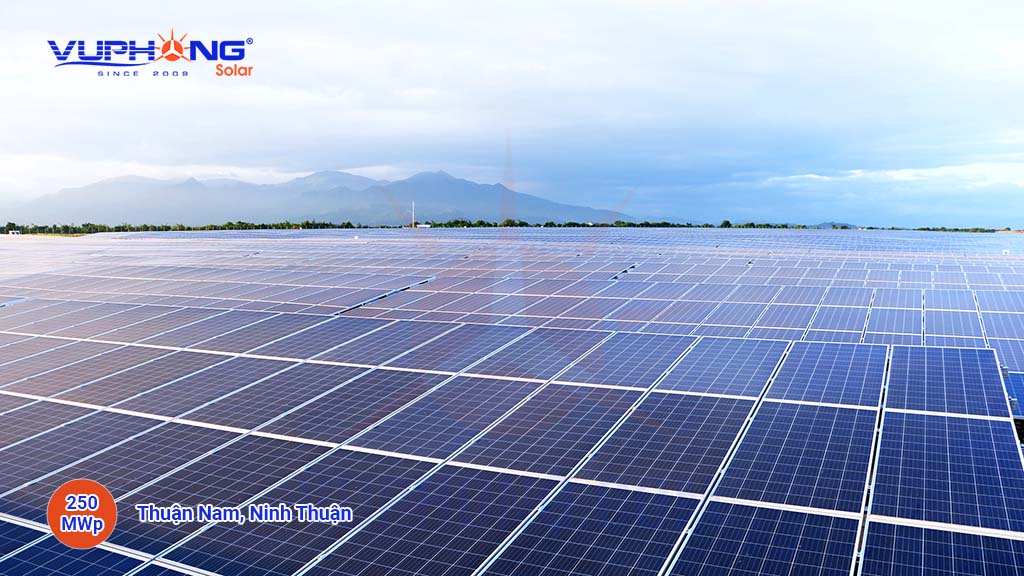 In the years 2018-2020, solar power witnessed rapid growth with numerous large-scale projects.
The rapid expansion of **solar power** in recent years has significantly bolstered the supply of clean electricity to the grid. This comes at a critical time, as the country faces potential power crises and the energy sector globally shifts towards clean energy to reduce **greenhouse gas emissions**. However, the concentration of many **solar power** projects in a few provinces with the highest **solar power** development potential (due to abundant sunny hours and high solar radiation) but low local electricity consumption creates stress on the power transmission and distribution system. This presents a challenge not only for electricity providers but also for investors aiming to maximize profits from **solar energy**.
Solar Power Dispersed in High-Load Base Areas: The Trend and Opportunity
**Solar power**, and **renewable energy** in general, not only helps the electricity industry address its energy demands but also contributes positively to the environment and society. This aligns with **Vietnam**’s commitments to reduce **greenhouse gas emissions** and increase **renewable energy** utilization. The strategic orientation for Vietnam’s national energy development to 2030, with a vision to 2045 (as outlined in Politburo Resolution No. 55-NQ/TW), explicitly prioritizes “effective full exploitation and use for **renewable energy**, new energy, and clean energy.”
According to the draft rooftop solar price mechanism currently being prepared by the Ministry of Industry and Trade for submission to the Government—a replacement for the expired Decision No. 13—the price of rooftop solar electricity could decrease by approximately 30% compared to the current level. While this revised price may not be as attractive as the previous **FIT2 price**, it is still projected to offer profitable returns for investors. Crucially, this strategy aims to encourage corporate and industrial investors to adopt clean energy solutions for their operations. Consequently, the trend of **solar power** being dispersed across high-load base areas (such as industrialized provinces, industrial parks, and export processing zones) for self-production and self-consumption is anticipated to grow significantly in the near future. This reflects the evolving **solar power trends 2021** and beyond, particularly for businesses seeking sustainable energy strategies.
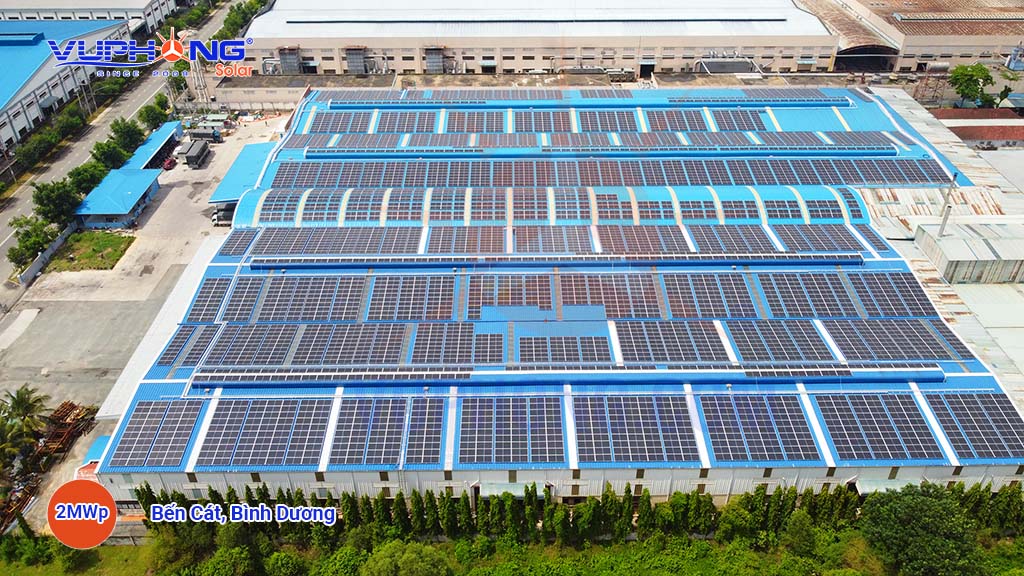 Solar power will continue to grow rapidly in high-load base areas with dispersed rooftop systems, especially the PPA (Power Purchase Agreement) model.
According to **Vu Phong Energy Group** (Solar & Wind Power), even without the attractive **FIT2 price**, **solar power** continues to gain traction among businesses. This is because, for enterprises, clean energy offers more than just reduced electricity bills or the opportunity to sell surplus power. It is an integral part of green manufacturing, sustainable development, and a pathway to new competitive advantages in the market, especially when dealing with demanding international markets. As a result, in addition to businesses directly **investing in solar power** systems on factory roofs, the PPA (Power Purchase Agreement) solar power model is becoming increasingly prevalent. This model allows businesses to achieve their green energy goals without any upfront capital expenditure, simply by leveraging their unused factory roof space. Furthermore, during the contract duration, businesses are relieved of the burden of operations and maintenance. This model is rapidly being adopted by a growing number of organizations as part of their “green” roadmap, contributing significantly to **renewable energy development Vietnam**.
The proliferation of dispersed **solar power** in high-load base areas will also help alleviate the need for extensive investments in energy transmission and distribution systems. This approach, especially when integrated with energy storage solutions and mini-SCADA data collection and monitoring systems, will be key to fostering more sustainable and widespread **renewable energy development Vietnam**.
During the Climate Summit in April 2021, attended by leaders from 40 countries, President Nguyen Xuan Phuc reiterated **Vietnam**’s firm commitment to reduce **greenhouse gas emissions** by 9% using domestic resources by 2030, and by up to 27% with bilateral and multilateral international support. The President also outlined targets for **renewable energy** to account for 20% of the total primary energy supply by 2030, increasing to 30% by 2045. Furthermore, emissions as a percentage of GDP are projected to decrease by approximately 15% by 2030, with methane emissions from agricultural production targeted for a 10% reduction.
Vu Phong Energy Group
Recent Posts
-
Vũ Phong Magazine – September 2026: Strategic Partnerships and Green Energy Transition in Focus
-
C47 Inaugurates Representative Office in Laos and Announces the Establishment of C47 Energy Laos: A Strategic Milestone in Its International Expansion
-
Solar Energy Businesses Strengthen Cooperation to Expand the Renewable Energy Solutions Ecosystem
-
 Energy is becoming a new competitive advantage for manufacturing businesses
 -
Vũ Phong Energy Group Advances Energy Infrastructure for the AI and Data Center Era On July 29, as part of the Vietnam Global Innovation Connect 2026 (VGIC 2026), Vũ Phong