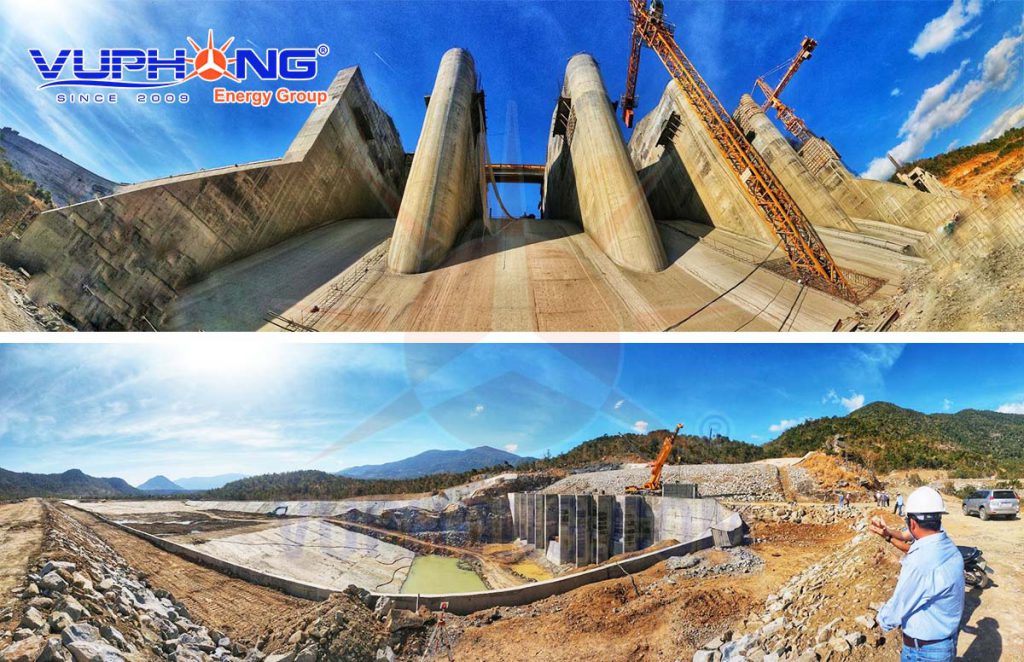
Stored hydroelectricity is rapidly becoming a vital component of modern energy infrastructure, essential for ensuring the smooth operation of power systems and optimizing generation capacity. With its numerous inherent advantages, pumped hydro storage stands out as the most effective alternative for large-scale electricity storage, playing a pivotal role in accelerating renewable energy development in Vietnam. This technology not, only enhances grid stability but also provides the necessary flexibility to integrate intermittent sources like solar and wind power, paving the way for a more resilient and sustainable energy future for the nation.
Flexible, Large Capacity and Operational Benefits
At its core, stored hydroelectricity, also known as pumped hydro storage, functions by converting electrical energy into potential energy. This is achieved through a system comprising two reservoirs situated at varying elevations. A hydroelectric power plant, equipped with a reversible turbine, is typically located near the lower reservoir, connected to the upper reservoir by a penstock. During periods of low electricity demand, surplus energy is used to pump water from the lower reservoir to the higher one. When demand peaks, water is released from the upper reservoir, flowing through the penstock to rotate the turbine and generate electricity, which is then fed back into the grid.
Integrating pumped hydro storage with variable renewable energy projects, such as solar power and wind power, significantly boosts overall operational efficiency and alleviates grid operation and regulation pressure. This system effectively balances the load demand of the power system, mitigating discrepancies in the load chart during peak hours. For instance, in the evening, when electricity demand is high but solar power generation is low, stored hydroelectricity can dispatch power. Conversely, during midday, when solar radiation is intense and solar power output is high, but demand is often lower, excess electricity can be used to pump water for storage. This symbiotic relationship ensures optimal utilization of solar and wind energy, while these renewable plants, in turn, provide the energy for water storage during off-peak periods.
Dr. Nguyen Huy Hoach from Vietnam Energy Magazine further emphasizes the extensive benefits of stored hydroelectricity. He notes, “Additional benefits include the ability to harden and store (both increase and decrease) reactive power, as well as the capacity to start and store. In power generation mode, the turbine-generator, like conventional hydropower generators, can respond swiftly to frequency offsets, contributing to the overall balance and stability of the power grid. The generator-motor can be adjusted in both turbine and pump modes to help with reactive power load and voltage stability.” This expert endorsement underscores the technology’s critical role in maintaining a robust and stable power system.
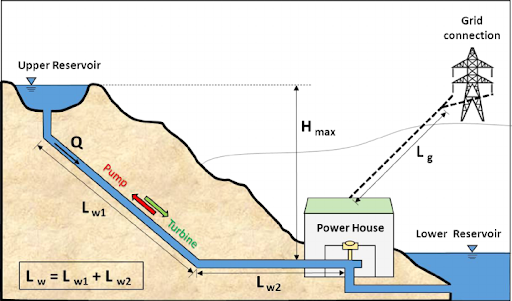
The diagram of stored hydroelectricity
Due to its remarkable high capacity, extensive storage capabilities, and an operational lifespan extending up to 70-80 years, pumped hydro storage remains the preferred energy storage solution globally, accounting for over 90 percent of all grid-scale electricity storage worldwide. These significant benefits of stored hydroelectricity make it a cornerstone of energy stability. In Vietnam, this technology is increasingly recognized as the promising future for the nation’s hydropower industry, critical for sustainable energy growth.
Developing Pumped Hydro Storage in Vietnam: A Strategic Imperative
Globally, the implementation of stored hydroelectricity has seen extensive research and application, with numerous projects exceeding 1,000 MW in capacity across countries like the US, Japan, and China. Notably, a pumped-storage hydropower plant in Virginia, USA, boasts a remarkable storage capacity of over 3 GW, often referred to as “the largest battery in the world.” In Vietnam, the adoption of these advanced energy storage solutions is a more recent development. The pioneering project in this domain is the Bac Ai hydroelectricity plant in Ninh Thuan province. With an estimated investment of approximately 21,100 billion VND, this crucial project commenced construction in early 2020. Electricity of Vietnam (EVN) serves as the investor, with Construction Joint Stock Company 47 (C47) acting as the main contractor. The Bac Ai hydroelectricity project update indicates it will feature four units, totaling a substantial 1,200 MW capacity, making it the largest in Southeast Asia. It ingeniously utilizes water from Song Cai Lake of the Tan My irrigation system, pumping it to an elevated reservoir for power generation through two parallel tunnels, each with a diameter of 5.5-7.5m and over 2.7km in length. The project’s development is structured in two phases: Phase 1 involved the construction of the outlet cluster, completed in the first quarter of 2021, while Phase 2 began construction of the main works in early 2022, targeting power generation by December 2026 and overall completion by the end of 2028.
The Bac Ai Storage Hydroelectricity project is set to become an exceptionally significant and impactful energy storage system upon its operation between 2025 and 2030. This timeline coincides with the rapid expansion of renewable energy sources in Vietnam, as numerous large-capacity solar and wind power plants are being invested in and commissioned. This project will play a crucial role in addressing the challenges of surplus and deficiency in the power system’s load profile. By stabilizing the grid, adjusting frequency, and providing a reliable mechanism for power system balance, Bac Ai will ensure the national power system operates safely and dependably. This demonstrates its essential contribution to Vietnam’s renewable energy development.
In line with national strategic goals, Resolution No. 55-NQ/TW outlines Vietnam’s energy development strategy to 2030, with a visionary outlook to 2045. This resolution targets renewable energy sources to constitute 15-20% of the total energy supply by 2030 and 25-30% by 2045. Given the significant advancements in solar and wind power technologies in recent years, growth in rooftop solar power for residential, commercial, and industrial applications, as well as wind farms, is anticipated to continue. The Bac Ai storage hydroelectricity project is strategically positioned as a key enabler, providing the necessary infrastructure to foster and integrate this ambitious renewable energy development into Vietnam’s future energy landscape.
Further Expertise: Construction Joint Stock Company 47 (C47)
Construction Joint Stock Company 47 (C47) has consistently been ranked among Vietnam’s Top 500 largest firms, bringing 45 years of extensive experience in large-scale irrigation, hydropower, tunnel construction, and industrial infrastructure. Beyond its involvement as the main contractor for the 1,200 MW Bac Ai Hydropower Project, C47’s impressive portfolio includes the 480 MW Hoa Binh Hydropower plant and numerous other multi-trillion VND projects like the Dong Mit Water Reservoir and Tan My. Looking ahead, C47 is actively diversifying its expertise, with plans to engage in wind power projects, explore opportunities in Metro tunnel construction, and expand its service markets across Vietnam’s Southeast and Southwest regions.
For further insights into pumped-storage hydropower in Vietnam, you can refer to the detailed analysis provided by further insights on pumped-storage hydropower in Vietnam.
Recent Posts
-
Vũ Phong Magazine – September 2026: Strategic Partnerships and Green Energy Transition in Focus
-
C47 Inaugurates Representative Office in Laos and Announces the Establishment of C47 Energy Laos: A Strategic Milestone in Its International Expansion
-
Solar Energy Businesses Strengthen Cooperation to Expand the Renewable Energy Solutions Ecosystem
-
 Energy is becoming a new competitive advantage for manufacturing businesses
 -
Vũ Phong Energy Group Advances Energy Infrastructure for the AI and Data Center Era On July 29, as part of the Vietnam Global Innovation Connect 2026 (VGIC 2026), Vũ Phong