In an era where environmental concerns increasingly shape consumer choices and global regulations, businesses face immense pressure to adopt sustainable practices across their operations. The traditional logistics model, often carbon-intensive, presents a significant challenge to achieving these goals. This article, originally by Vu Phong Energy Group, delves into the critical role of green logistics as an integral part of the green supply chain. It explores how integrating eco-friendly practices not only helps companies meet environmental standards but also enhances competitiveness and fosters sustainable growth. Discover how Vu Phong Energy Group analyzes this crucial shift and offers practical insights for businesses navigating the path to a greener future.
In an era where environmental concerns increasingly shape consumer choices and global regulations, businesses face immense pressure to adopt sustainable practices across their operations. The traditional logistics model, often carbon-intensive, presents a significant challenge to achieving these goals. This article, originally by Vu Phong Energy Group, delves into the critical role of green logistics as an integral part of the green supply chain. It explores how integrating eco-friendly practices not only helps companies meet environmental standards but also enhances competitiveness and fosters sustainable growth. Discover how Vu Phong Energy Group analyzes this crucial shift and offers practical insights for businesses navigating the path to a greener future.
“Greening” the logistics industry and implementing environmentally protective green logistics practices can significantly help businesses meet stringent environmental standards, enhance their competitiveness, and foster sustainable growth.
- Solar power is greening plastic factories
- Green lifestyle: When the customer behavior change, the business change
- Green hydrogen – a clean energy storage solution
A Stage in the “Green Supply Chain”
Developing an environmentally protective supply chain, often referred to as a green supply chain, is a pivotal element in any sustainable development strategy and the broader transition to a greener economy. Businesses increasingly view the “greening” of their supply chain as an integral part of their green investment strategy. This approach helps companies optimize the use of natural resources, minimize environmental impact, and simultaneously enhance their competitiveness and operational performance.
A comprehensive green supply chain involves multiple stages. It begins with sourcing eco-friendly materials. This is followed by adopting green designs and “greening” manufacturing processes through synchronized solutions such as utilizing clean energy, implementing energy-saving production techniques, and prioritizing waste recycling. Concurrently, businesses integrate green packaging and enhance warehouse management and operations to be more environmentally friendly. Green logistics then emerges as the subsequent critical stage, where businesses develop and implement resource-saving transportation systems to deliver their green products to customers efficiently and responsibly.
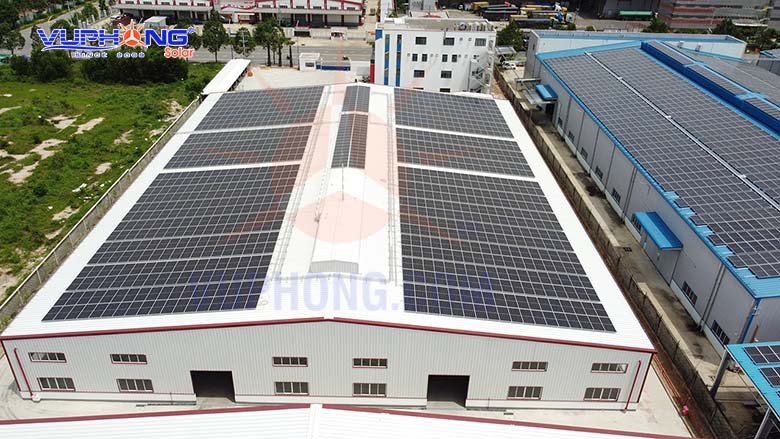 Businesses use clean energy to “greening” production
Green logistics represents a crucial juncture within both the broader green supply chain initiative and the strategic roadmap for sustainable growth. As consumers increasingly prioritize eco-friendly practices and the global trend towards a greener economy accelerates, green logistics is garnering more attention and professional investment. This shift highlights its growing importance for businesses aiming for long-term viability and positive environmental impact.
Opportunities for Developing Green Logistics
The establishment of green supply chains is a global trend, spearheaded by prominent organizations and enterprises worldwide. The pressing issue of climate change, coupled with the competitive drive to attract consumers towards a green lifestyle, has prompted both manufacturers and logistics service providers to collaboratively adapt. Numerous global brands have committed to and implemented action plans to develop green supply chains, aiming to reduce their CO2 emissions reduction across the entire chain for sustainable growth and mitigating climate-related pressures.
For instance, Nike has pledged to decrease greenhouse gas emissions by 65% in its owned and operated facilities and by 30% across its supply chain by 2030. Hitachi, a leading Japanese technology company, is committed to eliminating carbon emissions from its operations by 2050 and will collaborate with over 30,000 suppliers to achieve this goal. Similarly, Kuehne + Nagel (K+N), a global leader in logistics, committed to becoming carbon neutral in all its activities by 2020 and proactively addresses the carbon footprint of its suppliers’ transportation services—including airlines, shipping lines, and trucking businesses—starting in 2030. Consequently, developing green logistics and green production will significantly enhance manufacturing businesses’ competitiveness, enabling them to integrate into global supply chains and expand their reach to environmentally-conscious customers. This illustrates the robust opportunities for developing green logistics in Vietnam.
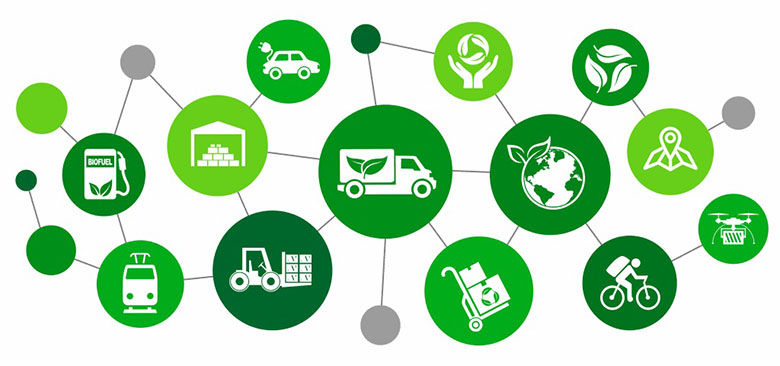 Green logistics is becoming a global trend (Internet Photo)
Moreover, the logistics industry is experiencing rapid expansion. The global logistics market is projected to reach USD 3,215 billion in 2021, marking a 17.6% increase over 2020. The Vietnamese logistics industry is also growing robustly, at an average annual rate of 14-16%. According to Agility’s (a leading global logistics service provider) report on the Emerging Market Logistics Index 2021, Vietnam currently ranks 8th among the Top 10 nations, a significant jump of three places from 2020. In the context of Vietnam’s increasing international integration and the rapid growth of e-commerce, advancing green logistics will bolster competitiveness for businesses operating in this sector within the domestic market, while simultaneously unlocking numerous opportunities in foreign markets. This underscores the potential for implementing green logistics for sustainable growth.
Additionally, “greening” logistics will contribute to a significant CO2 emissions reduction and minimize the environmental impact of logistics activities, thereby fostering a sustainable environment. This endeavor is actively pursued globally, and Vietnam is no exception. At the COP26 Climate Summit on November 1, 2021, Mr. Pham Minh Chinh, Vietnam’s current Prime Minister, articulated, “Vietnam would develop and implement stronger measures to reduce greenhouse gas emissions by utilizing its resources, as well as the cooperation and support of the international community, along with nations with high-emitting economies, in terms of both finance and technology transfer, particularly the implementation of mechanisms under the Paris Agreement, to reach ‘net-zero’ emissions by 2050.”
Diversity of logistics “greening” solutions:
- Green transportation solutions: The use of transportation methods that emit fewer emissions, such as electric vehicles powered by clean energy, and water transportation.
- Green packaging: The use of recyclable and reusable packaging, as well as packaging made from biodegradable and compostable materials.
- Green warehouse: Warehouses that utilize clean and efficient energy and incorporate sustainable building design.
- Green logistics data management: Employing technology for effective data management, enhancing logistics efficiency, and minimizing transportation and delivery times.
- Reverse logistics: Increasing the reuse of products, packaging, and materials; emphasizing remanufacturing and refurbishing.
Recent Posts
-
Vũ Phong Magazine – September 2026: Strategic Partnerships and Green Energy Transition in Focus
-
C47 Inaugurates Representative Office in Laos and Announces the Establishment of C47 Energy Laos: A Strategic Milestone in Its International Expansion
-
Solar Energy Businesses Strengthen Cooperation to Expand the Renewable Energy Solutions Ecosystem
-
 Energy is becoming a new competitive advantage for manufacturing businesses
 -
Vũ Phong Energy Group Advances Energy Infrastructure for the AI and Data Center Era On July 29, as part of the Vietnam Global Innovation Connect 2026 (VGIC 2026), Vũ Phong