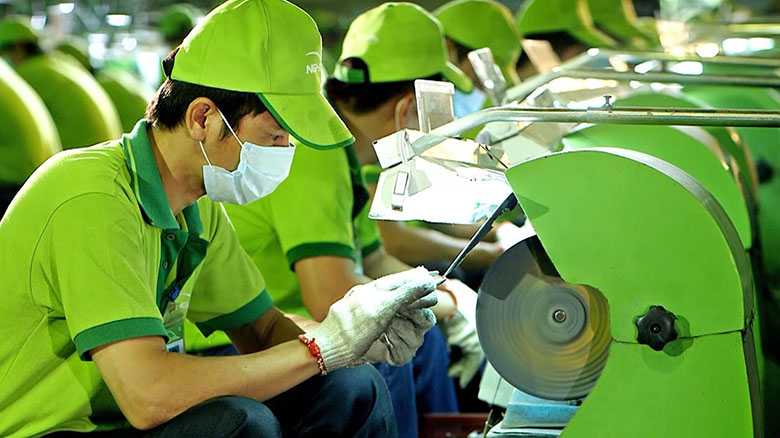
Smart factory development is rapidly becoming a cornerstone for enhancing industrial competitiveness and fostering sustainable growth among Vietnamese enterprises. As the global market shifts towards Industry 4.0, integrating digital technologies and automation into manufacturing processes is no longer an option but a necessity. This transition helps businesses optimize operations, improve product quality, and reduce costs, thereby strengthening their position in global supply chains. Recognizing this critical need, collaborative initiatives between governmental bodies and industry leaders are providing the training and technical support required to transform traditional factories into intelligent, efficient, and resilient production hubs, paving the way for a new era in Vietnam’s industrial sector.
Vietnam’s Initiative for Smart Factory Development
To accelerate the adoption of modern manufacturing practices, the Ministry of Industry and Trade has partnered with Samsung Korea Group to implement a comprehensive Smart Factory Development Support Project. The initiative aims to train 100 Vietnamese experts and assist 50 enterprises in building smart factory models over two years (2022-2023). In 2022 alone, the project successfully supported 26 businesses, including 14 in the northern region and 12 in the southern region. The program is set to continue its expansion in 2023, targeting an additional 24 businesses across both regions.
Participants in the program receive expert guidance on creating a strategic roadmap toward becoming a “Smart Factory.” The process involves redesigning management systems to ensure a seamless flow of operational information. Samsung’s experts directly transfer management solutions based on industrial digitalization and automation, revolutionizing everything from order intake and production planning to product storage and logistics. Key performance data related to productivity, quality, delivery, and cost are managed and analyzed in real-time, empowering managers to make faster and more accurate decisions.
Success Story: How Nghia Nippers Transformed Its Operations
Nghia Nippers Corporation (Kem Nghia) stands out as one of the project’s most significant success stories. The company achieved outstanding efficiency gains by implementing targeted improvements, including controlling errors to improve reproducibility rates, enhancing the productivity of the nipper sharpening process, and managing the Overall Equipment Effectiveness (OEE) of its stamping machines to boost operating rates. Furthermore, the company improved its monitoring of Computer Numerical Control (CNC) machines and tool lifespan.
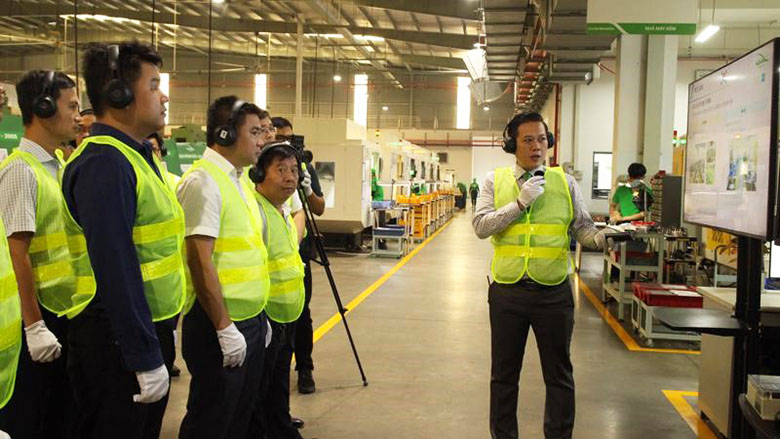
Assessing the efficiency of Nghia Nippers Corporation’s Smart factory development support project
During the program’s summary report, Mr. Nguyen Minh Tuan, Chairman of Nghia Nippers, expressed his gratitude to the project’s experts and technical teams. He stated his hope that “in the period of 2023-2024, Kem Nghia will continue to receive support… to develop into a smart, modern, and sustainable factory, becoming one of Ho Chi Minh City’s and Vietnam’s typical enterprises.” Alongside Nghia Nippers, other notable companies like Thai Duong Rubber, Dien Quang Lamp, and Liksin Packaging are also receiving support to develop their smart factory capabilities and enhance their role in global supply chains.
Enterprises Actively Improve Competitiveness
A recent Provincial Competitiveness Index (PCI) survey by VCCI revealed that 92% of enterprises were negatively impacted by the Covid-19 pandemic, facing challenges such as reduced customer access, labor shortages, and supply chain disruptions. In this context, VCCI emphasizes that innovation, adaptability, and brand building are critical for businesses to improve competitiveness and achieve sustainable development. The evolution towards smart and modern factories is a direct response to these challenges, enabling companies to become more resilient and efficient.
Sustainable Factories: The Synergy of Smart Technology and Clean Energy
Beyond digitalization, many enterprises are building sustainable factories by integrating clean energy solutions. Nghia Nippers, for example, partnered with Vu Phong Energy Group and the ecoligo German Investment Fund to install a 2.23 MWp rooftop solar power system at its factory in Tan Phu Trung Industrial Park. This system generates over 3.2 million kWh of clean energy annually, reducing CO2 emissions by more than 2,000 tons per year. By embracing renewable energy, Nghia Nippers has become a pioneer in using clean energy, enhancing its brand value and competitiveness in a global market that increasingly prioritizes sustainability.
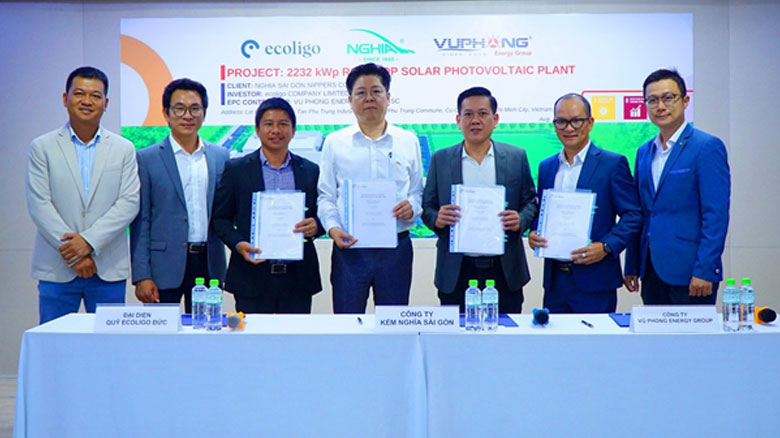
Vu Phong Energy Group, ecoligo – German Investment Fund, and Nghia Nippers Corporation at the cooperation signing ceremony to develop the 2.23 MWp solar power system
To facilitate this transition, many businesses are adopting the Power Purchase Agreement (PPA) model for solar power. Pioneered by Vu Phong Energy Group with international investment funds, this flexible approach allows manufacturing companies to utilize their idle roof space for clean energy generation without any upfront investment. Through long-term contracts, businesses can secure stable energy prices, reduce operational costs, and demonstrate a tangible commitment to achieving the United Nations’ Sustainable Development Goals (SDGs).
|
Businesses interested in clean energy solutions to green production and move towards sustainable development, please contact our Call Center via 1800 7171 or +84 9 1800 7171, or send an email to hello@vuphong.com for more information. |
Vu Phong Energy Group
Recent Posts
-
Vũ Phong Magazine – September 2026: Strategic Partnerships and Green Energy Transition in Focus
-
C47 Inaugurates Representative Office in Laos and Announces the Establishment of C47 Energy Laos: A Strategic Milestone in Its International Expansion
-
Solar Energy Businesses Strengthen Cooperation to Expand the Renewable Energy Solutions Ecosystem
-
 Energy is becoming a new competitive advantage for manufacturing businesses
 -
Vũ Phong Energy Group Advances Energy Infrastructure for the AI and Data Center Era On July 29, as part of the Vietnam Global Innovation Connect 2026 (VGIC 2026), Vũ Phong