Sustainable tourism development has emerged as a critical imperative for the global travel industry, particularly in the wake of recent global challenges and heightened awareness of the climate crisis. This article delves into the multifaceted strategies required for fostering an eco-friendly travel ecosystem, emphasizing the pivotal role of local businesses like hotels and travel agencies. Drawing insights from Mr. An, Pham Dang, Deputy General Director at Vu Phong Energy Group and JCI Asia Pacific Development Council Councilor, we explore actionable solutions for achieving sustainable growth, reducing carbon footprint reduction, and maximizing local economic benefits for communities. The expert perspective from Vu Phong Energy Group underscores the importance of integrating renewable energy and corporate social responsibility into the core of tourism operations, paving the way for a resilient and responsible future for the sector.
The discussion on the necessity of concurrent solutions for sustainable tourism development was a key highlight shared by Mr. An, Pham Dang, Deputy General Director at Vu Phong Energy Group, during the 2022 JCI ASPAC Sakai Takaishi Conference on May 28, 2022. He stressed the significant influence that local hotels and travel agencies hold in shaping this future. JCI ASPAC, or the Junior Chamber International Asia Pacific Conference, serves as a vital platform for members across the Asia Pacific region to exchange innovative ideas, develop impactful community initiatives, and foster collaborations among national organizations.
The 2022 JCI ASPAC Sakai Takaishi Conference, held online from May 25-29, 2022, notably merged several in-person conferences planned for Sakai and Takaishi, Japan. It was within this influential setting that Mr. An, Pham Dang, representing JCI Vietnam and his role as Deputy General Director of Vu Phong Energy Group, delivered a compelling presentation on “Sea tourism & sustainable tourism” in the post-Covid-19 era. His session, part of the business networking segment, engaged over 80 participants and entrepreneurs from ten Asia-Pacific countries. Mr. An’s discourse specifically addressed emerging sustainable tourism development trends and practical solutions that align closely with the United Nations Sustainable Development Goals (SDGs), demonstrating profound expertise in the field.
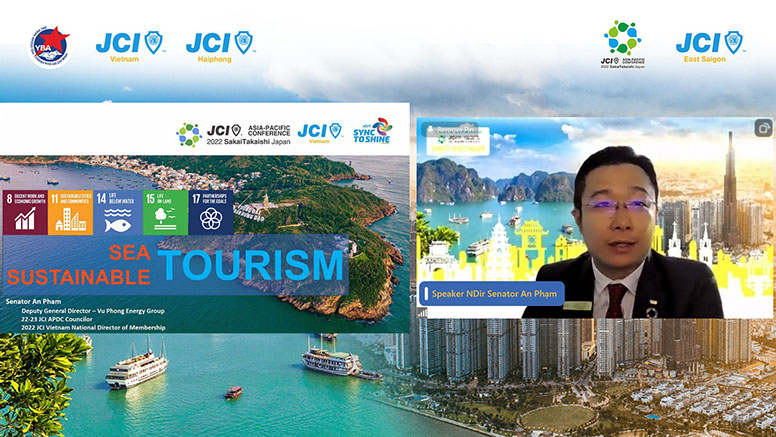
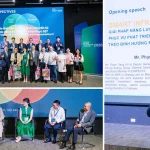
Mr. An, Pham Dang, Deputy General Director of Vu Phong Energy Group and JCI Vietnam representative, spoke on “Sea tourism & sustainable tourism.”
The global shift towards green tourism, often synonymous with sustainable tourism, has been significantly propelled by the Covid-19 pandemic and a growing worldwide awareness of the climate crisis. According to the 2022 Booking.com Sustainable Travel Report, a comprehensive survey involving over 30,000 individuals across 32 countries and territories revealed that 81 percent of travelers prioritize sustainable travel. Furthermore, 50 percent indicated that recent climate change news had directly influenced their decision to opt for more sustainable travel choices. A remarkable 78 percent of travelers expressed intentions to stay at a sustainable accommodation at least once in the upcoming year, with 71 percent aspiring to travel more sustainably. These statistics underscore the critical need for the tourism industry to evolve, developing and offering more sustainable tourism experiences to meet current traveler preferences and attract international visitors.
Addressing these evolving demands, Mr. An, Pham Dang, articulated a comprehensive framework of solutions vital for sustainable tourism development. These include effective sustainable management strategies, initiatives aimed at mitigating negative environmental impacts (especially concerning electric and thermal energy, and water resources), measures to enhance economic and social benefits for local communities, and efforts to safeguard cultural and natural heritage. He emphasized that truly sustainable tourism development requires the simultaneous implementation of multiple solutions, necessitating collaboration among diverse stakeholders—from governmental management agencies and individual entrepreneurs to tourism businesses and tourists themselves. Accommodation and tourism enterprises, in particular, play a profoundly important role in this collective endeavor, impacting solar power for sustainable hotels and broader green initiatives.
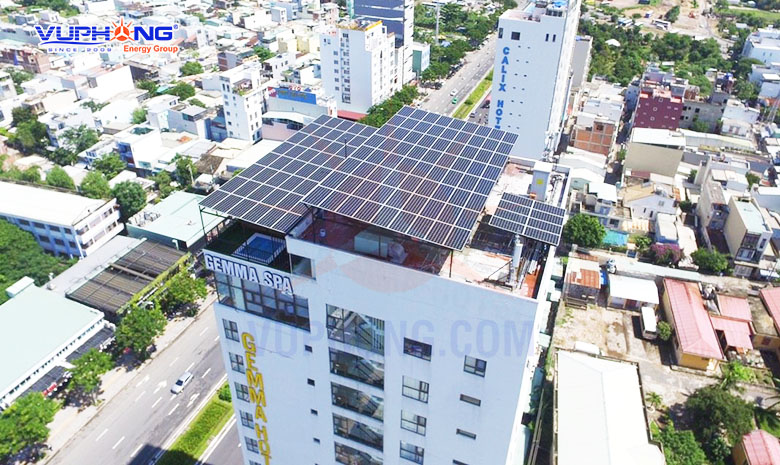
Many resorts and hotels use renewable energy to save energy costs and reduce carbon footprints in business operations
A growing number of tourism businesses in Vietnam are actively embracing green tourism and sustainable practices. Beyond promoting water-saving solutions, reducing electricity and thermal energy consumption, increasing reuse initiatives, and prioritizing environmentally friendly products, many resorts and hotels have strategically invested in rooftop solar power systems. These systems maximize renewable energy sources, leading to significant reductions in energy costs and an impressive carbon footprint reduction in their business operations. Furthermore, many tourism businesses actively participate in local and international environmental campaigns, such as the Earth Hour initiative, tree planting activities, cycling events, and beach cleanups, demonstrating a strong commitment to corporate social responsibility.
Hai Au Hotel – Seagull Hotel (Quy Nhon, Binh Dinh) participates in the Earth Hour 2022 campaign
To achieve holistic sustainable development and enrich local experiences, Mr. An, Pham Dang, advises businesses to strengthen the integration of traditional local culture. This can be manifested through various forms, including architecture, decoration, cuisine, and performing arts activities, while also proactively supporting the development of locally produced goods. Prioritizing the utilization of local human resources, in particular, is an impactful strategy that contributes directly to achieving United Nations SDG 8: “Decent work and economic growth.” By adopting such sustainable development solutions, accommodation facilities can transform into truly sustainable accommodations, exemplifying how hotels implement sustainable practices.
“Sustainable development is an unavoidable trend, both to meet the requirements of visitors and to contribute to the whole community’s sustainable development, for the Earth,” Mr. An shared, encapsulating the urgent call for a global shift towards a green economy and dedicated environmental protection. For more insights on the broader topic, consider exploring the development of sustainable tourism in Vietnam.
|
The theme for World Environment Day on June 5, 2022, was “Only One Earth.” This theme notably echoed the focus of the inaugural United Nations Conference on the Human Environment—the 1972 Stockholm Conference—which led to the establishment of the United Nations Environment Program (UNEP) five decades prior. This powerful message underscores the paramount importance of environmental protection and fuels global efforts to cultivate a healthier planet. It serves as a call to action for collective, tangible efforts to support nature and our Earth. In Quang Ninh, on May 28, 2022, the Ministry of Natural Resources and Environment collaborated with various entities to host a launching ceremony in observance of the International Day for Biological Diversity (May 22) and World Environment Day, alongside the Action Month for the Environment 2022. Minister of Natural Resources and Environment Tran Hong Ha presented six specific directives for ministries, branches, and localities: – Emphasize the successful transformation of economic structures, shifting the growth model from “brown” to “green.” This involves moving from intensive natural resource exploitation towards a knowledge economy, digital economy, circular economy, and low-carbon investments in natural capital. – Develop specific plans within ministries, sectors, local governments, and businesses to effectively implement the Government’s commitment at COP26. This includes energy transition from coal to clean and renewable energy for hotels and other sectors, reducing greenhouse gas emissions (including methane), and ensuring the sustainable use of land and water resources. – Strengthen public cooperation and solidarity, while actively promoting the role of international collaboration in addressing complex global environmental and climatic challenges. |
Vu Phong Energy Group
Recent Posts
-
 Vũ Phong Energy Group Advances Energy Infrastructure for the AI and Data Center Era On July 29, as part of the Vietnam Global Innovation Connect 2026 (VGIC 2026), Vũ Phong
 -
Vu Phong Energy Group, Solplanet and Jinko Solar Successfully Organize Basic Solar Technical Training Course 1
-
The Handshake of Two Harmonious Philosophies: Vu Phong Energy Group and Solplanet
-
Vu Phong Energy Group Participates in VEPG Panel Discussion
-
Vũ Phong Day 2026 – Taking action to build the future