The global energy landscape increasingly highlights the crucial importance of alternative and renewable energy sources, with solar power emerging as a premier solution for significantly reducing our dependence on fossil fuels. Continuous advancements in solar tracker system and module design are consistently expanding the possibilities of advanced solar tracking systems, thereby improving both overall efficiency and affordability.
A recent breakthrough from the esteemed Solar Energy Research Institute of Singapore, published in the renowned journal Joule, demonstrates how a combination of innovative techniques can lead to highly viable and effective solar power generation. This significant solar technology advancement directly addresses the core challenge of maximizing energy capture while simultaneously driving down costs, paving the way for more cost-effective solar power.
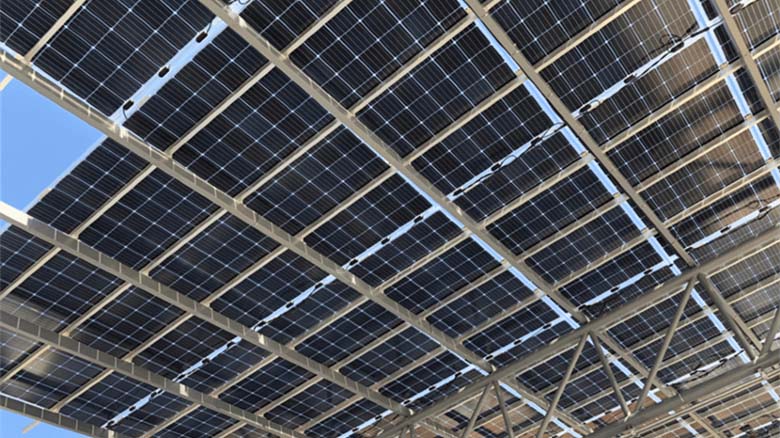
The comprehensive study, expertly spearheaded by Carlos Rodríguez-Galle and his dedicated team, integrated **double-sided solar panels** capable of collecting sunlight from both their front and back surfaces, with an axial system meticulously designed to track the Sun’s movement across the sky. This innovative combined system proved remarkably effective, generating approximately 35% more energy compared to traditional, single static solar panel arrangements. Crucially, this innovation also significantly reduces the cost of electricity, achieving an average saving of 16%, making it a truly practical and cost-effective solar power technology. These findings illustrate the tangible benefits of solar panel tracking and how double-sided solar panels work in synergy.
These findings represent a substantial step forward in the development of efficient solar power technology, which is instrumental in mitigating the adverse effects of climate change and decreasing global dependence on fossil fuels. Such advancements in solar technology are crucial for building a truly sustainable energy future and implementing robust renewable energy solutions.
Illustration of double-sided solar panels actively tracking the sun.
Efficiency: The Key to a Solar-Powered Future
The relentless pursuit of enhanced solar panel efficiency is a continuous and vital effort across the entire renewable energy sector. Organizations like Energy Sage exist to help consumers navigate choices for the most efficient and economical solar panels to meet their specific energy needs.
The efficiency of solar panels is intrinsically linked to the performance of their internal solar cells. Factors such as chemical composition and electrical configuration directly influence their ability to convert solar energy into usable electrical energy. Research in this domain includes inspiring work in 2019 by researchers from the University of Manchester, who focused on eliminating material defects in silicon that were found to be responsible for a 2% drop in efficiency. While seemingly minor, a 2% improvement across existing global solar farms equates to more energy than all of the UK’s nuclear power plants combined. This context powerfully highlights the monumental impact of the Singapore team’s 35% increase in energy output, showcasing significant solar energy efficiency gains.
The Solar Energy Research Institute of Singapore team adopted a distinct strategy for increasing solar panel efficiency, prioritizing the external arrangement of panels over the internal configuration of solar cells. **Double-sided solar panels** can be deployed in the same physical footprint as single-paneled units while simultaneously producing a higher amount of energy per unit area. The team’s primary enhancement is the solar panel’s capability to pivot and track the Sun’s trajectory throughout the day, thereby capturing more incident light, leading to significant energy capture maximization. These innovations can later be integrated with more advanced solar cells for even greater efficiency gains, further solidifying the potential of renewable energy solutions.
Staring at the Sun: Soaking up Energy for Longer Periods
To thoroughly evaluate the efficiency of their innovative solar panel design, the research team utilized invaluable data from NASA’s Clouds and the Earth’s Radiant Energy System (CERES) satellite. This satellite is specifically designed to compute Earth’s radiation budget—the crucial balance between incoming and outgoing radiation. Leveraging this robust data allowed the researchers to calculate the total daily radiation received by Earth’s surface, and then meticulously adapt this information to precisely determine the impact of the Sun’s position and the panel’s orientation on the amount of radiation a solar panel can receive. This rigorous methodology also enabled them to accurately estimate the solar panel energy cost reduction achievable with their system.
The researchers confirmed that their double-sided, Sun tracking solar panel system delivered stable results, even when adverse weather conditions were incorporated into their sophisticated models. Their analysis further suggests that while this solar panel innovation offers benefits globally, its true potential for increasing solar energy output would be maximized when deployed in regions closer to the Earth’s poles, highlighting optimal applications for solar power generation.
The Challenges of Double-Sided Solar Panels and Future Outlook
Despite the promising results, the widespread adoption of this advanced system still faces several challenges. The team’s research models primarily focused on deployment in large-scale solar power farms. The immediate hurdle lies in determining if the system can be scaled down for smaller applications while retaining its cost-effectiveness, a key consideration for widespread renewable energy solutions.
As with any significant solar technology advancement, the double-sided tracking panel technology must demonstrably outperform existing solutions. While single-panel Sun tracking panels are already in use, the double-sided system currently entails higher manufacturing costs. Nevertheless, the research team remains confident that the substantial benefits in efficiency and energy cost reduction will ultimately persuade the traditionally conservative solar power market to embrace these next-generation double-sided solar panels.
The next phase of the team’s research involves replacing the standard silicon-based solar cells used in the modeling with more advanced solar materials, which promise even greater efficiency but come at a higher price point. Fortunately, manufacturing costs associated with renewable energy technologies, including solar, are in a nearly constant state of decline. This encouraging trend suggests that the innovative system proposed by the team could be commercialized and contribute significantly to solving the ongoing energy crisis solutions in the near future, further solidifying the role of solar energy efficiency in our journey towards a sustainable energy future.
Recent Posts
-
Vũ Phong Magazine – September 2026: Strategic Partnerships and Green Energy Transition in Focus
-
C47 Inaugurates Representative Office in Laos and Announces the Establishment of C47 Energy Laos: A Strategic Milestone in Its International Expansion
-
Solar Energy Businesses Strengthen Cooperation to Expand the Renewable Energy Solutions Ecosystem
-
 Energy is becoming a new competitive advantage for manufacturing businesses
 -
Vũ Phong Energy Group Advances Energy Infrastructure for the AI and Data Center Era On July 29, as part of the Vietnam Global Innovation Connect 2026 (VGIC 2026), Vũ Phong