Renewable energy sources like solar and wind face a major challenge: inconsistent supply. Green hydrogen offers a sustainable solution by converting surplus electricity into storable hydrogen fuel. This article explores the potential of green hydrogen as a zero-carbon energy storage technology, analyzing its role in advancing renewable energy adoption and reducing emissions. Drawing insights from Vu Phong Energy Group’s expertise, we will break down the practical applications, global developments, and key considerations for integrating green hydrogen into the energy transition. A critical keyword in this discussion is green hydrogen.
As a fuel for various industries, hydrogen has been a focus in many governments’ energy development policies. Green Hydrogen, in particular, has the potential to be the “key” to a zero-carbon economy. It is also an effective renewable energy storage technology, aiding in promoting renewable energy sources such as wind power and solar power.
Large reserves, a variety of applications
Hydrogen (H2) is a common chemical element that accounts for approximately 75% of the universe’s total mass and more than 90% of all atoms. Hydrogen is currently widely employed in chemical industries such as ammonia, methanol, fertilizer manufacturing, metallurgy, oil refining, semiconductors, and cosmetics. In the energy sector, hydrogen can be burnt directly in internal combustion engines, replacing natural gas to supply power for daily civil needs or specialized needs such as fuel for spacecraft and defense industries. Hydrogen is also used as an energy source in fuel cell systems, converted into electricity via an electrochemical process. Hydrogen fuel cells for renewable energy can become a viable fuel source for road, marine, railway, and aviation vehicles; they will play a pivotal part in the hydrogen economy development in the future.
Because hydrogen is a secondary energy source derived from primary sources, such as water or other hydrocarbon molecules, it has a large reserve. Natural gas, oil thermochemical techniques, and gasification of heavy hydrocarbons such as petroleum and coal are all methods for hydrogen production. However, most methods emit CO2 greenhouse gases; the hydrogen produced by this approach is known as gray hydrogen. Blue hydrogen is created by the thermochemical process, which combines CO2 capture and storage technology. Hydrogen is also produced using water electrolysis (the use of electricity to split water into H2 and O2), which utilizes electricity generated by renewable energy storage sources such as solar power, wind power, etc. This approach emits no greenhouse gases. Green Hydrogen is the hydrogen created by this process.
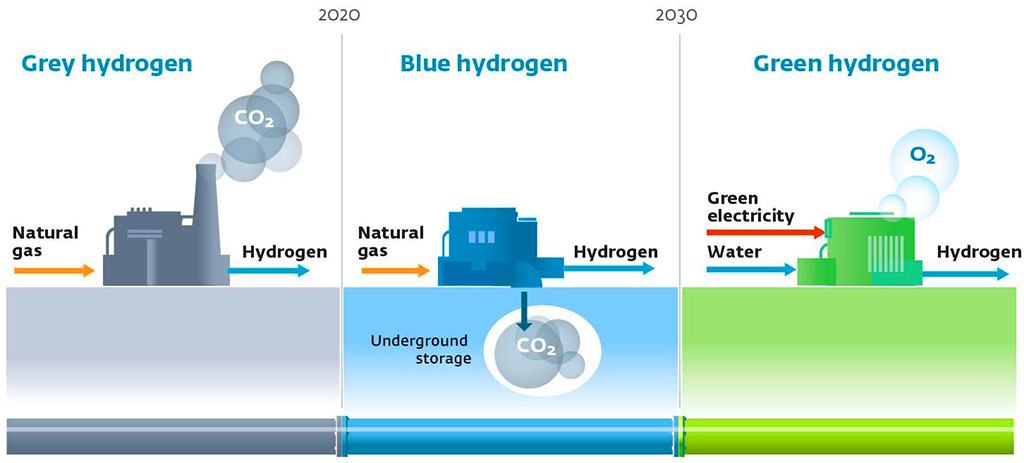 Source: theworldofhydrogen.com
Long-term, efficient energy storage solution
Because electricity is utilized to manufacture hydrogen (through electrolysis of water), it is then created via electrochemical processes (in fuel cells) or by electricity-powered gas turbines. Hydrogen is a highly efficient and long-lasting renewable energy storage medium. Wind-generated hydrogen can be thought of as a form of stored energy used during times of low wind or at night. The development of Green Hydrogen will also encourage the advancement of renewable energy and the energy transition trend. Consequently, effective energy storage solutions are crucial for maximizing the potential of intermittent renewable sources.
Combining renewable energy plants (solar power plants, wind power plants, etc.) with Green Hydrogen production facilities via electrolysis and power plants using fuel cells or hydrogen-powered gas turbines to form an integrated Gas-Electricity system is another option for utilizing both renewable energy and hydrogen as an energy storage solution.
The facts of hydrogen development in the world
Many countries are interested in hydrogen as a sustainable energy source to replace fossil fuels. Hydrogen is also being pursued as an energy storage strategy to fully capitalize on the benefits of renewable energy, meet energy transition needs, and tackle environmental issues while assuring national energy security.
The European Commission (EC) unveiled the “New Hydrogen Strategy” in 2020, which will run from 2020 to 2050 and aims to phase out greenhouse gas emissions in all industries across the European Union while also producing reusable hydrogen. Currently, governments, universities, and businesses in the EU are working on more than 70 hydrogen research and development initiatives. Germany aspires to be the world’s leading producer and supplier of hydrogen within the EU. The German Cabinet committed in June 2020, with the “National Hydrogen Strategy,” to invest 9 billion euros ($10.2 billion) to achieve this aim. Meanwhile, the French government plans to deploy 10% Green Hydrogen in industrial applications by 2022, increasing to 20-40% by 2027.
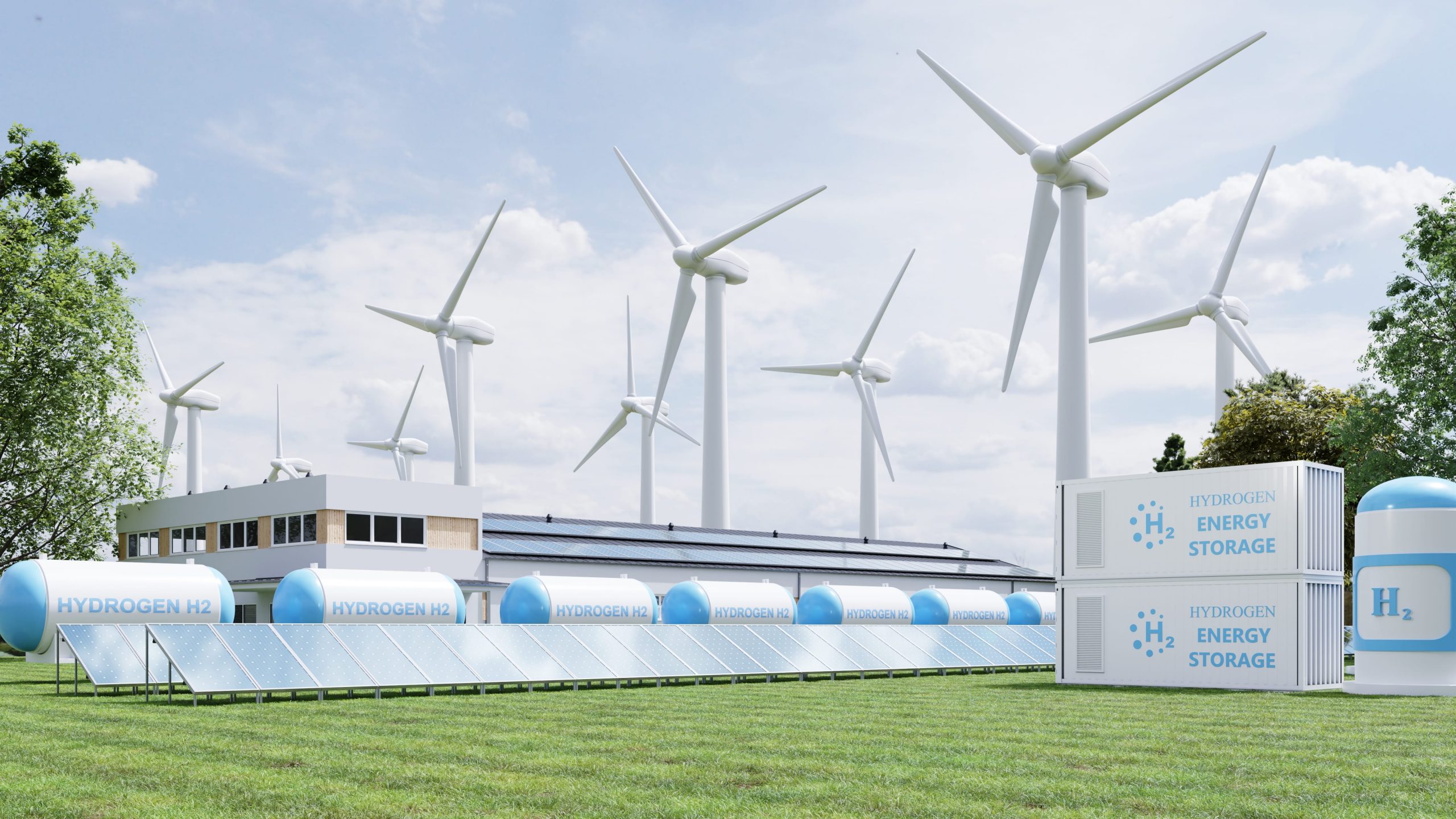 Hydrogen is a solution for storing and developing renewable energy (Source: Internet)
Since 1992, Japan has been using hydrogen to construct the International Clean Energy Network, focusing on research and hydrogen technologies for ten years. Then Japan launched a slew of national strategic plans and roadmaps centered on hydrogen and fuel cells. South Korea likewise aspires to be the world leader in the market share of hydrogen-powered automobiles and hydrogen fuel cells for renewable energy. This country’s government has promised to use the “hydrogen peroxide solution” (HPS) until 2022 to systematically increase the hydrogen economy development.
Currently, hydrogen technology challenges include inadequate storage infrastructure, high costs of hydrogen production via electrolysis, and challenging transportation. However, with many governments and corporations investing in research and development, when these problems are overcome, hydrogen will be a potential energy source, supporting renewable energy and, together with renewable energy, becoming a substantial source of electricity in the future.
Read more about the other energy storage technologies here
Source: Vu Phong Energy Group JSC
Recent Posts
-
Vũ Phong Magazine – September 2026: Strategic Partnerships and Green Energy Transition in Focus
-
C47 Inaugurates Representative Office in Laos and Announces the Establishment of C47 Energy Laos: A Strategic Milestone in Its International Expansion
-
Solar Energy Businesses Strengthen Cooperation to Expand the Renewable Energy Solutions Ecosystem
-
 Energy is becoming a new competitive advantage for manufacturing businesses
 -
Vũ Phong Energy Group Advances Energy Infrastructure for the AI and Data Center Era On July 29, as part of the Vietnam Global Innovation Connect 2026 (VGIC 2026), Vũ Phong