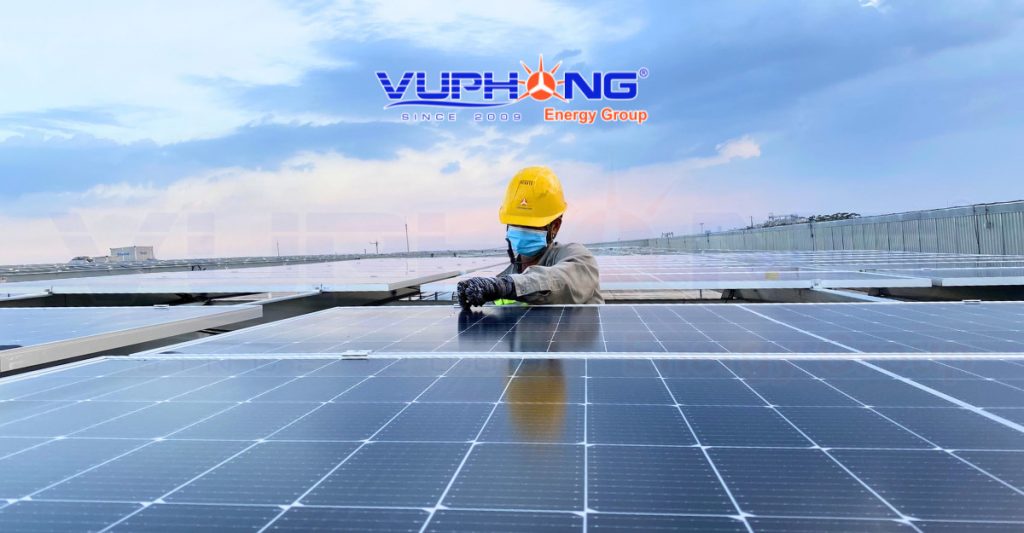
A significant development in Ho Chi Minh City rooftop solar initiatives has been announced, marking a crucial step towards sustainable urban development. The National Assembly recently approved Resolution No. 98/2023/QH15, a landmark policy enabling administrative agencies and public service units across Ho Chi Minh City to install rooftop solar power systems. This strategic move is poised to create an additional on-site power source, significantly enhancing the city’s energy independence and promoting cleaner energy consumption. This article delves into the specifics of this new resolution, exploring the immense solar power potential within HCMC’s public buildings and outlining the substantial benefits these systems will bring to the metropolitan area, aligning with broader goals for green growth and carbon neutrality.
Ho Chi Minh City Embraces Rooftop Solar: A Landmark Resolution
On June 24, 2023, the National Assembly officially approved Resolution No. 98/2023/QH15, a pivotal document establishing specific mechanisms and policies for the comprehensive development of Ho Chi Minh City. A key provision within this resolution permits administrative offices, public service units, and agency offices—all identified as public property in Ho Chi Minh City—to install rooftop solar power systems, provided their roofs meet the necessary technical requirements. This groundbreaking policy paves the way for a significant increase in clean energy infrastructure, transforming public buildings into active contributors to the city’s energy supply. Soon, Ho Chi Minh City will benefit from an additional on-site power source, with numerous administrative and non-commercial structures equipped with efficient rooftop solar panels.
Exploring the Vast Solar Power Potential in HCMC
The “Rooftop solar power development project in Ho Chi Minh City until 2030” scheme, formulated by the Ho Chi Minh City Department of Industry and Trade, reveals the immense potential for solar energy application within the city. Specifically, the potential for Ho Chi Minh City rooftop solar initiatives is estimated at over 5,081 MWp. This includes a significant capacity within the administrative and non-business agencies group, which encompasses buildings under People’s Committees at district, ward, and community levels, city department buildings, schools, training centers, hospitals, medical facilities, theaters, sports halls, and cultural centers. For this specific group, the identified rooftop solar power potential exceeds 166 MWp, highlighting a substantial opportunity for public buildings solar integration.
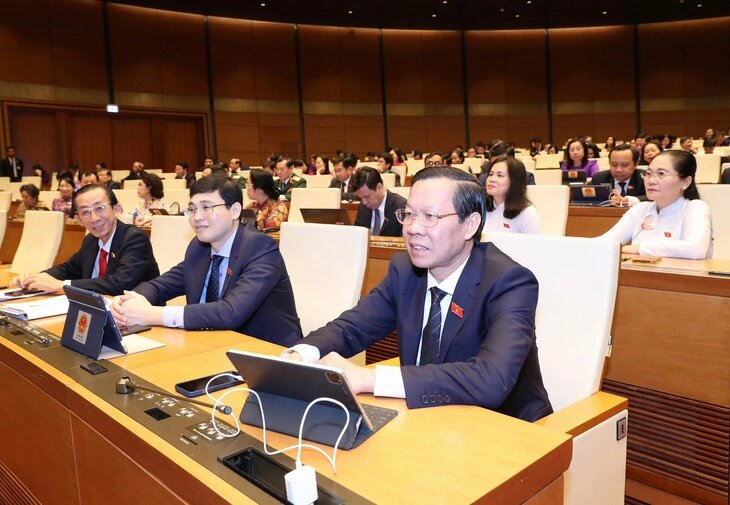 Mr. Mai, Phan Van, Chairman of the Ho Chi Minh City People’s Committee, along with National Assembly delegates, approved the resolution on the afternoon of June 24th (Photo’s Source: Tuoi Tre News).
The Multifaceted Benefits of Rooftop Solar Power Systems in Ho Chi Minh City
The installation of solar power systems on the headquarters of administrative agencies and public service units in Ho Chi Minh City for self-consumption offers a multitude of benefits. Primarily, it will significantly boost the local power supply, thereby reducing the city’s reliance on external power transmission. This increased redundancy in the power system will enhance overall power system stability and bolster the city’s electricity supply security. Beyond grid benefits, these rooftop solar power projects actively promote the development of clean energy sources, leading to a substantial reduction in greenhouse gas CO2 emissions. Furthermore, they contribute to decreasing heat radiation for buildings, aligning with the broader trend of green growth and sustainable development of HCMC, consistent with the Government and City Leaders’ progressive policy on developing renewable energy.
While the current approval focuses on public buildings, the “Rooftop solar power development project in Ho Chi Minh City until 2030” scheme indicates that the 166 MWp potential from administrative and non-business agencies represents only 3.27% of the city’s total rooftop solar power development potential. The largest potential lies within households (62.34%, approximately 3,168 MWp) and production groups (31.28%, approximately 1,590 MWp), including businesses and warehouses. These sectors are also crucial for prioritizing rooftop solar energy system deployment to achieve ambitious emission reduction goals and carbon neutrality across Ho Chi Minh City. This broader context underscores the importance of continued renewable energy development in Ho Chi Minh City.
Experts emphasize that with the approval of this new Resolution, establishing clear procedures to facilitate the swift implementation and enforcement of this policy is paramount. Such efforts are critical to realizing the National Power Development Master Plan VIII’s objective: by 2030, 50% of office buildings and 50% of residential houses in Vietnam will utilize self-generated and self-consumed power. This policy is a crucial step for Ho Chi Minh City administrative rooftop solar initiatives.
Additionally, the Resolution introduces a financial mechanism designed to reduce greenhouse gas emissions through carbon credit exchange and offset. Carbon credits generated by city-funded programs and projects will be available for sale to both domestic and foreign investors. Significantly, 100% of the revenue derived from these carbon credit transactions will be deposited into the city’s budget. These funds are earmarked for climate change adaptation programs, the promotion of a green economy development, digital economy, and circular economy initiatives within Ho Chi Minh City’s jurisdiction, further cementing the city’s commitment to sustainable practices. This mechanism highlights the sophisticated approach HCMC is taking towards environmental stewardship and clean energy HCMC.
Comprising 12 articles, the Resolution outlines pilot mechanisms and specific policies covering vital areas such as investment management, finance, state budget allocation, urban management, environmental resources, priority industries for strategic investors, science and technology management, innovation, and the administrative organization of the City’s government and Thu Duc City. This comprehensive Resolution is scheduled for implementation on August 1st, 2023. For further insights into the city’s initiatives, readers may refer to this related Vietnamese article.
Vu Phong Energy Group
Recent Posts
-
Vũ Phong Magazine – September 2026: Strategic Partnerships and Green Energy Transition in Focus
-
C47 Inaugurates Representative Office in Laos and Announces the Establishment of C47 Energy Laos: A Strategic Milestone in Its International Expansion
-
Solar Energy Businesses Strengthen Cooperation to Expand the Renewable Energy Solutions Ecosystem
-
 Energy is becoming a new competitive advantage for manufacturing businesses
 -
Vũ Phong Energy Group Advances Energy Infrastructure for the AI and Data Center Era On July 29, as part of the Vietnam Global Innovation Connect 2026 (VGIC 2026), Vũ Phong