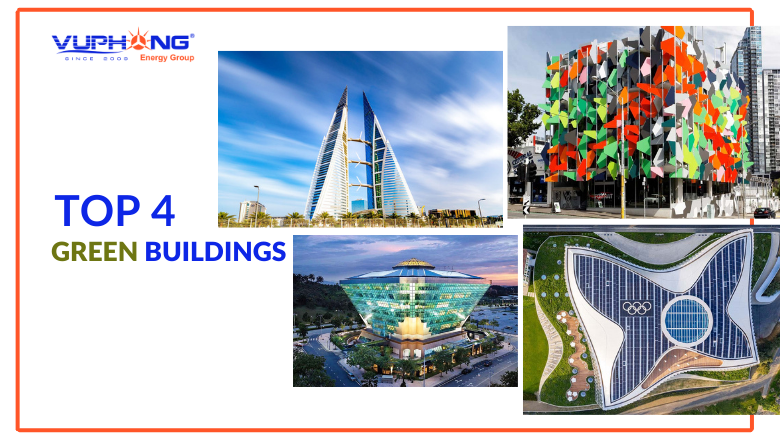
Green buildings represent a revolutionary shift in construction, moving towards structures that are environmentally responsible and resource-efficient throughout their life cycle. As a leading advocate for sustainable development, Vu Phong Energy Group highlights these pioneering examples of sustainable architecture, which have garnered prestigious accolades for their innovative designs and exceptional energy efficiency. This article delves into how these impressive structures not only integrate lush greenery but also harness sophisticated, energy-saving technologies to provide maximum value to occupants and the planet. Understanding these leading examples is crucial for anyone interested in the future of sustainable living and the transformative power of eco-conscious design in modern construction.
Pixel Building
Completed in 2010, the Pixel Building swiftly gained international recognition for its distinctive design, establishing itself as one of the world’s most sustainable buildings. Its facade integrates fixed sunshades with flexible pixel panels that dynamically adjust to solar paths, optimizing natural light while minimizing heat gain. Architects strategically employed double-layer glass to enhance airflow and further limit thermal exposure, showcasing advanced energy-efficient architecture. The structure is also equipped with two photovoltaic panels and three wind turbines, providing on-demand renewable energy. A unique “field design” on its roof allows for natural growth and harvesting, complementing sophisticated water storage and treatment systems that enable the building to be self-sufficient in water supply.
The Pixel Building achieved an impressive 100 perfect scores under the Green Star certification system, with an additional 5 points awarded for its innovative carbon-neutral system, anaerobic digestion, and vacuum toilet systems. In 2012, it attained the world’s highest LEED rating for energy and environment, further solidifying its status. Its numerous honors include the Premier Sustainability Award (Victoria) in 2011, affirming its role as a pioneer in sustainable design and a benchmark for future green building projects.
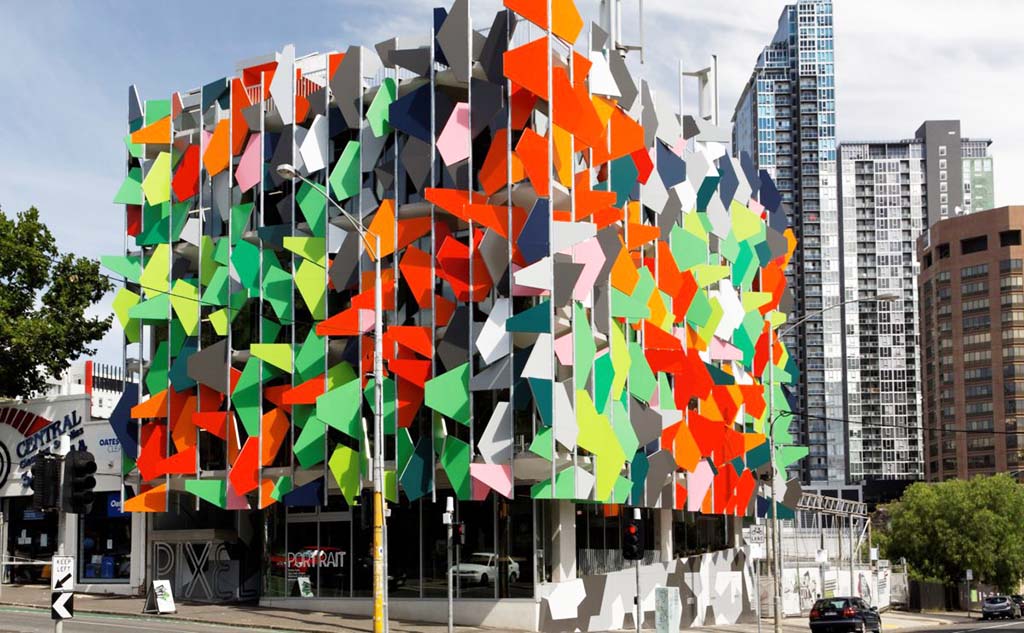
Pixel Building (Source: Internet)
Bahrain World Trade Center
Designed by South African architect Shaun Killa, the Bahrain World Trade Center features iconic 240-meter twin towers in Manama, the capital of the Kingdom of Bahrain, housing a prominent commercial mall. Its unique design incorporates three powerful wind turbines, each with a 29-meter diameter, positioned on three skybridges connecting the two structures. These turbines, each with a capacity of 225 kW, are strategically oriented northward to capture consistent winds from the Persian Gulf. The sail-shaped design of the towers maximizes wind flow through the turbines, enabling them to generate approximately 1.1-1.3 GWh/year, which accounts for 11-15 percent of the building’s total electricity consumption, a testament to its renewable energy systems.
Beyond its wind power integration, the Bahrain World Trade Center utilizes numerous environmentally friendly materials, features a recycled water system, connects to an efficient cooling system, and employs an advanced insulation system to conserve energy and reduce greenhouse gas emissions. This exceptional architectural marvel has received several significant accolades, including the most effective construction plan in 2006 from LEAF and a special Award for ideal design in Arab buildings, recognizing its leadership in energy-efficient buildings and sustainable design.
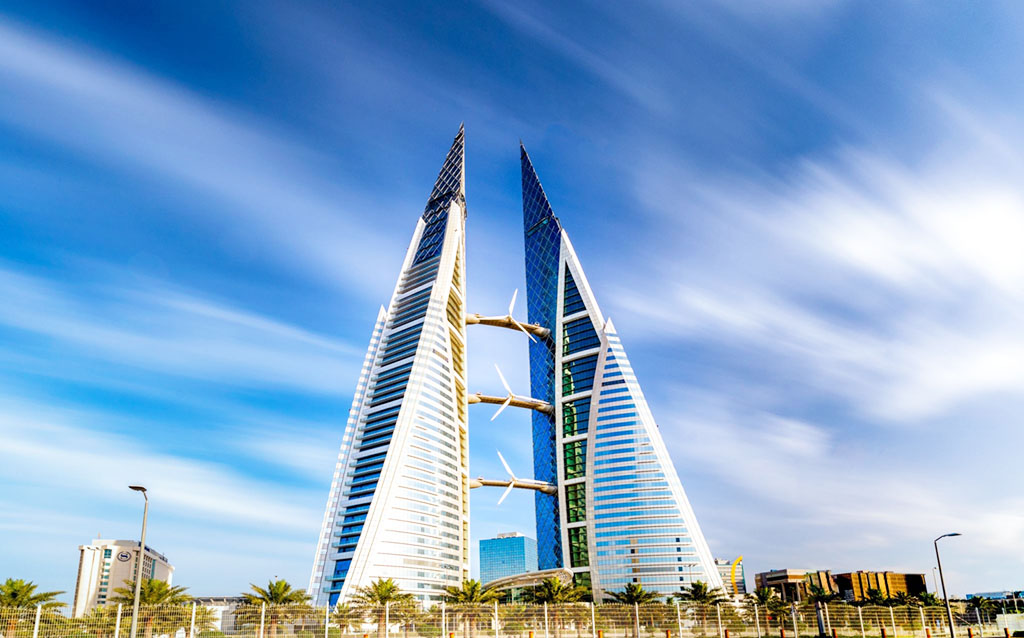
Bahrain World Trade Center (Source: Internet)
Olympic House
Olympic House, the new headquarters of the International Olympic Committee (IOC) in Lausanne, Switzerland, exemplifies a pinnacle of sustainable architecture, earning three prestigious environmental certifications, including LEED Platinum. Notably, Olympic House secured an impressive 93 LEED certification points from the United States Green Building Council (USGBC). It holds the distinction of being the first international headquarters and only the second building globally to achieve both the highest level (Platinum) of the Swiss Sustainable Building Standards (SNBS) and LEED Platinum certification.
The design of Olympic House draws inspiration from an athlete’s dynamic movement, combining rigorous energy efficiency, water conservation, and stringent building material and environmental requirements. The building relies on renewable energy, primarily generated by rooftop solar panels. Estimates indicate that Olympic House will achieve approximately 35% urban energy savings and 60% water savings compared to average new constructions. Furthermore, IOC’s global partners contribute energy-saving solutions and operational equipment, such as zero-emission hydrogen cars, reinforcing the building’s commitment to a carbon-neutral future and its reputation as an innovative green building design feature.
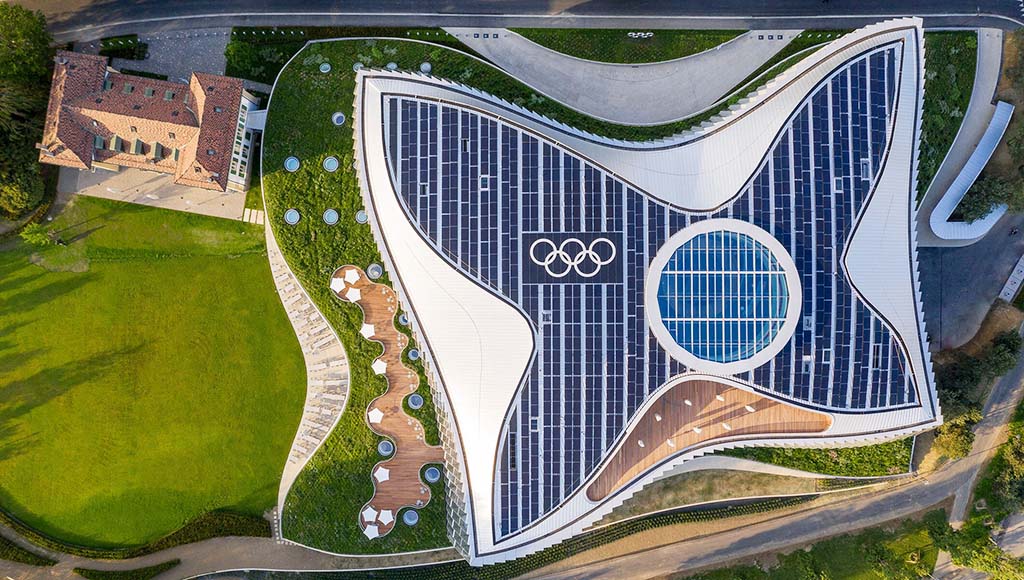
Olympic House (Source: Internet)
Diamond Building
The Diamond Building, home to the Malaysian Energy Council, is designed in a striking pyramid shape, providing extensive roof space for solar panels that supply approximately 10% of the building’s electricity needs. Its design effectively leverages natural light through massive skylights and automatic curtain systems that adjust to sunlight intensity and angle, leading to substantial energy savings. These energy-saving devices enable the building’s lighting system to achieve up to 80% savings compared to conventional offices. This eco-friendly structure also incorporates an advanced rainwater harvesting system, reusing water to save 70-80 percent of its total water consumption, showcasing excellent water conservation strategies.
As Malaysia’s inaugural green building, the Diamond Building has earned both Singapore’s Green Mark Platinum Certificate and Malaysia’s GBI Platinum Certificate. This project has also received numerous significant awards, including the CIDB and MCIEA Awards in 2010, First Prize in the ASEAN Energy Efficiency Competition in 2012, and Second Prize in the ASHRAE Technology Competition in 2013, solidifying its position among the top examples of sustainable green buildings.
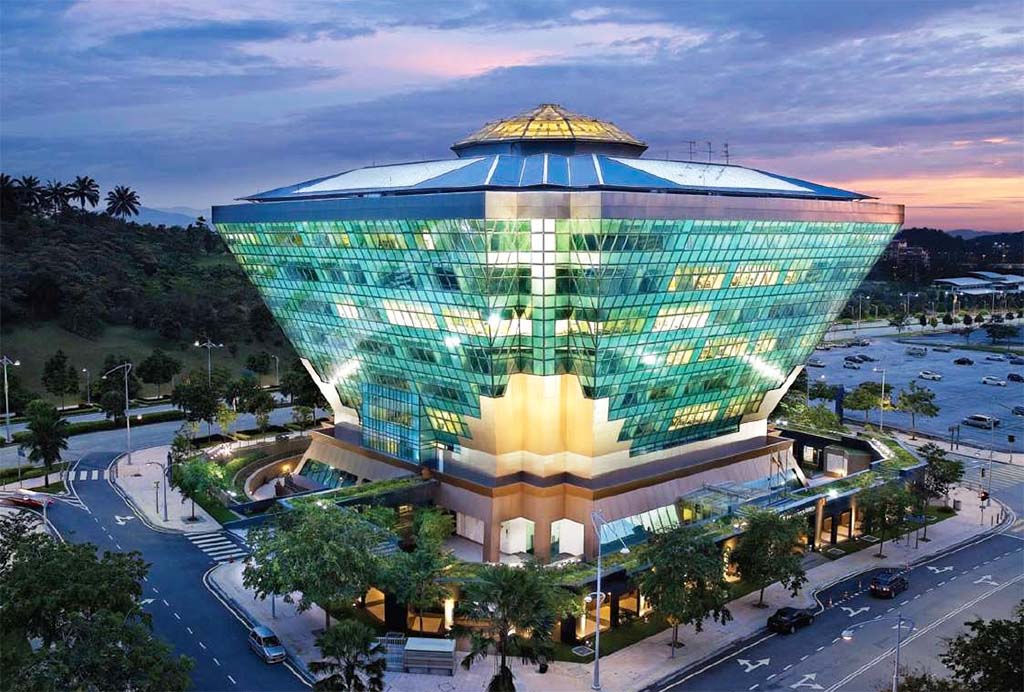
Diamond Building (Source: Internet)
The global movement towards “greening” projects and integrating sustainability into architectural endeavors is rapidly gaining momentum. Sustainable design is intrinsically linked to economic viability, environmental preservation, and social well-being. Key components of long-term development include the utilization of renewable energy, comprehensive energy saving solutions, efficient water conservation and reuse, the adoption of sustainable materials, and rigorous waste reduction strategies. These examples demonstrate the immense potential and tangible benefits of embracing sustainable architecture and adhering to robust sustainable development strategies. For further insights into green building principles and their local applications, explore Vu Phong Energy Group’s resources.
Recent Posts
-
Vũ Phong Magazine – September 2026: Strategic Partnerships and Green Energy Transition in Focus
-
C47 Inaugurates Representative Office in Laos and Announces the Establishment of C47 Energy Laos: A Strategic Milestone in Its International Expansion
-
Solar Energy Businesses Strengthen Cooperation to Expand the Renewable Energy Solutions Ecosystem
-
 Energy is becoming a new competitive advantage for manufacturing businesses
 -
Vũ Phong Energy Group Advances Energy Infrastructure for the AI and Data Center Era On July 29, as part of the Vietnam Global Innovation Connect 2026 (VGIC 2026), Vũ Phong