
UPDATE 2022: For many discerning investors and forward-thinkers, Tesla’s vision for the future of integrated manufacturing hardware and software has consistently been a key driver of the company’s enduring global allure. This transformative perspective extends beyond just electric vehicles, encompassing a holistic approach to a sustainable future through renewable energy.
Tesla’s Vision for a Sustainable Future: EV, Solar, and Battery Storage Integration
Even more captivating than individual product innovations is Tesla’s comprehensive strategy to seamlessly combine energy production with advanced storage. As articulated in Master Plan, Part Deux, this involves building “gorgeous solar roofs with smoothly integrated battery storage.” While the acquisition of SolarCity and its integration into Tesla generated significant discussion, solar energy remains an absolutely crucial component of Tesla’s Vision EV Solar Battery Storage ecosystem for a truly sustainable future.
On April 6, when Tesla CEO Elon Musk announced his visit to the RiverBend facility—a 96-acre site on the Buffalo River—media outlets, plant employees, and ardent Tesla supporters buzzed with anticipation. Despite his limited prior presence there, Musk personally oversaw the meticulous design and rigorous testing of the solar tiles that constitute Tesla’s next-generation solar rooftop product at this very location, underscoring the company’s deep expertise in this domain.
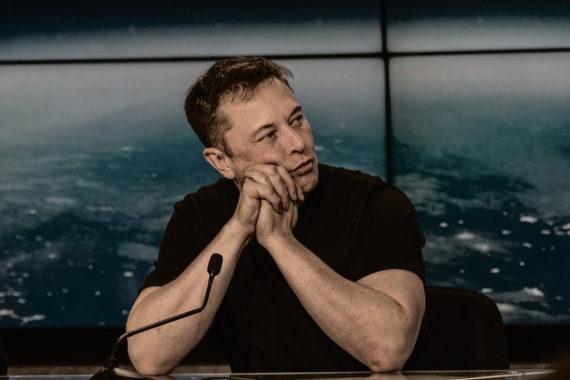 Elon Musk, a key figure in driving clean energy innovation.
Indeed, a growing number of individuals and businesses are embracing Tesla’s vision of an energy-independent, green future. Musk confidently predicts that this year will mark the most significant period yet for the company’s burgeoning energy division, signaling a massive stride towards widespread energy independence.
The Energy Triumvirate: Electric Vehicles, Home Solar Systems, & Battery Storage
Consider the profound impact when a family decides to invest in a comprehensive home energy system that includes state-of-the-art home solar panels, an advanced electric vehicle, and a smart battery storage unit installed within their residence. This integrated setup embodies the future of home energy systems, offering unparalleled energy resilience and efficiency.
On sunny days, the array of solar panels can fully power the home’s electrical needs while simultaneously recharging the electric vehicle’s battery. Once these primary demands are met, any surplus rooftop-generated electricity is directed to the fixed battery, bolstering the home’s capacity for energy consumption during nighttime hours or on overcast days. Furthermore, the system’s intelligent computerized control seamlessly feeds any remaining excess energy back into the main power grid, often resulting in financial compensation for the homeowner from their local grid operator. This system truly highlights the advantages of solar battery storage.
 A household adopting Tesla’s integrated energy ecosystem.
What additional benefits does this three-pronged renewable energy system offer? Crucially, it provides a robust shield against escalating energy prices, ensuring long-term financial stability for homeowners. Being an integral part of the “Internet of Things,” the system’s interconnected software empowers families to meticulously monitor and evaluate how power is being generated, consumed, and stored. It also diligently tracks the amount of solar energy contributed back to the grid, offering complete transparency and control over their energy footprint.
In Germany, the adoption of battery energy storage is rapidly accelerating, with approximately one in every two rooftop solar panel installations now incorporating a storage system. While the 120,000 homes and small businesses utilizing solar energy represent a fraction of Germany’s 81 million inhabitants, the precipitous drop in battery prices has led the German Development Bank to discontinue battery discounts (which previously reduced costs by 30%) between 2013 and 2018. This demonstrates the market’s maturity and the economic viability of such systems.
Despite a less robust year than anticipated for US solar businesses in 2018, low component prices are significantly driving volume demand in 2019. Prompted by a surge in utility-scale project signings, the Solar Energy Industries Association (SEIA) in the US revised its solar installation forecasts from 2020 to 2023 upwards by 3.2 GW in late 2018. This trend indicates that as utility-scale solar systems become more cost-effective, rooftop solar systems in more locations will also see increased affordability, bolstering the global adoption of renewable energy.
The overall cost of a complete renewable energy home package is influenced by various factors, including the property’s size, its orientation toward the sun, and the specific choices of EV, solar panels, batteries, and monitoring systems. However, it is increasingly clear that homeowners can substantially reduce their power costs by leveraging these cutting-edge technologies and abundant sunlight, aligning with a sustainable future through clean energy transition.
Global Progress: Tesla’s Vision for Energy Independence is Unfolding
Tesla’s Powerwall, a renowned retail advanced energy storage solutions system, is already facilitating massive storage of renewable energy globally. In Q4 2018, Tesla’s energy generation and storage segment reported a substantial $371.5 million in revenue, marking approximately a 25% year-over-year increase. This growth highlights the increasing demand for effective renewable energy storage.
Against a backdrop of escalating concerns regarding the environmental impact of fossil fuels and the capacity and resilience of electricity systems worldwide, engineers and policymakers are intensifying their focus on independent energy storage solutions. Experts are converging on a shared conclusion: a green future featuring an electric car in every garage, solar panels on every roof, and batteries in every basement is no longer a distant ideal but a practical and achievable reality. Mounting evidence around us affirms how innovative energy storage technologies and renewable energy will fundamentally transform the traditional power grid, driving power grid modernization.
As batteries become progressively more affordable and powerful, they will play an increasingly vital role in storing the inherently erratic output of wind and solar energy. For tangible proof, one need only look to Florida, where the Florida Power & Light Company (FPL) has announced ambitious plans to construct the largest battery energy storage system to date, strategically located adjacent to an existing solar power plant. With the proliferation of such storage systems across Florida and efficiency enhancements to existing combustion turbines at other power facilities, FPL aims to replace 1,638 MW of conventional generating capacity, marking a significant step towards decentralized energy.
FPL’s enhanced understanding of solar and battery optimization, coupled with the rapidly declining prices of new technologies, serves as an invaluable blueprint for utilities across the US and indeed the entire globe, catalyzing the global adoption of renewable energy.
Furthermore, ScottishPower has unveiled a substantial $2.65 billion investment program for 2019, with a keen focus on large-scale battery storage and expanding public EV charging stations. This represents the company’s largest investment to date, following the sale of its thermal generation division in late 2018, signaling a definitive shift towards clean energy infrastructure.
The funds allocated for 2019 are part of a broader, more expansive investment program set to deploy three times as much capital between 2018 and 2022. These funds are strategically distributed: 40% is dedicated to additional renewable power capacity, 42% to enhancing network infrastructure, and 15% to developing cutting-edge services and products for the company’s approximately 5 million clients, all geared towards energy efficiency.
Image by winterseitler/pixabay.
Siemens Corp., a prominent manufacturer of power systems, is set to collaborate with three esteemed US Department of Energy R&D energy laboratories in the coming years. This partnership aims to test innovative technologies designed to significantly increase the availability, diversity, and resilience of the electrical supply:
- The National Renewable Energy Laboratory in Golden, Colorado;
- The Oak Ridge National Laboratory in Oak Ridge, Tennessee;
- The Pacific Northwest National Laboratory in Richland, Washington.
By contributing its cutting-edge Software Defined Inverter (SDI) technology, Siemens is poised to leverage its extensive experience in commercializing advanced power system innovations. Once validated, this technology holds immense potential for integration into new developments, serving to strengthen and modernize the nation’s electric grid. This includes enhancing capabilities for microgrids and distributed energy resources such as advanced battery storage.
Tesla’s pioneering grid-scale battery in South Australia paved the way for a visionary proposal: the creation of the largest virtual solar power plant in history. This ambitious project will encompass rooftop solar systems on 50,000 residences over the next four years, all interconnected to centralized grid storage facilities. The ripple effect of this monumental effort is being felt globally, demonstrating the profound impact of Tesla’s integrated energy strategy. The key to realizing such revolutionary initiatives lies firmly with governments possessing the political will and foresight to implement them.
According to a comprehensive research study, the market for energy storage systems is projected to surge dramatically, from an estimated $196.7 billion in 2017 to a staggering $301.4 billion by 2025. Furthermore, the US-based Energy Storage Association predicts an exponential expansion of the worldwide energy storage business, escalating from a modest base of just 0.34 GW installed in 2012 and 2013 to an astounding annual installation size exceeding 40 GW by 2022. These figures highlight the immense growth potential in this sector.
For many consumers, the decision to invest in battery storage systems isn’t solely driven by economic considerations or a desire to move away from fossil fuels. A significant motivator for many individuals is the aspiration for greater autonomy from traditional electricity corporations and insulation from volatile, rising costs. Others are simply eager to actively participate in shaping the future of energy. The advantages of solar battery storage are multifaceted and increasingly recognized by both residential and commercial consumers, fueling the momentum towards a more resilient and sustainable energy landscape.
Vu Phong Energy Group
Recent Posts
-
Vũ Phong Magazine – September 2026: Strategic Partnerships and Green Energy Transition in Focus
-
C47 Inaugurates Representative Office in Laos and Announces the Establishment of C47 Energy Laos: A Strategic Milestone in Its International Expansion
-
Solar Energy Businesses Strengthen Cooperation to Expand the Renewable Energy Solutions Ecosystem
-
 Energy is becoming a new competitive advantage for manufacturing businesses
 -
Vũ Phong Energy Group Advances Energy Infrastructure for the AI and Data Center Era On July 29, as part of the Vietnam Global Innovation Connect 2026 (VGIC 2026), Vũ Phong