The plastic industry faces mounting pressure to adopt sustainable practices as environmental concerns grow. While many companies have invested in eco-friendly materials and circular economy models, the integration of solar power into production remains a critical challenge. This article explores how solar energy systems are transforming plastic factories, with insights from Vu Phong Energy Group’s experience in implementing green solutions. By analyzing real-world case studies and the PPA model, we uncover practical strategies for reducing emissions and enhancing corporate responsibility in the sector.
In the context of the world’s shift towards sustainable development, numerous major brands within the plastic industry have proactively implemented innovative solutions. These initiatives include the adoption of clean energy in manufacturing processes, the utilization of environmentally friendly PET raw materials, and the establishment and execution of circular economy models.
A New Challenge for the Plastic Industry
The plastics sector stands as a dynamic industry within Vietnam’s economy, consistently demonstrating a high annual growth rate. Even amidst the unprecedented challenges posed by the Covid-19 outbreak, statistics from the Vietnam Plastics Association indicate continued growth in production and business for the sector in 2020. Compared to 2019, plastic export turnover increased by 6.3%, while total industry revenue saw a 10.8% rise. Vietnamese plastic products are not only widely utilized in daily life and serve various domestic industrial production sectors but are also exported to 150 countries globally, including highly developed and discerning markets such as Japan, the European Union, and the United States.
The EU-Vietnam Free Trade Agreement (EVFTA), which came into effect in August 2020, has significantly expanded opportunities for the plastics industry. The EU market alone represents approximately 18.2% of Vietnam’s total plastic export turnover and plastic products. To fully capitalize on this opportunity and sustain growth, beyond enhancing raw material production capacity and minimizing dependence on imported materials, the plastic industry must address a critical new challenge: the imperative for environmentally friendly plastic products. This represents an undeniable trend for both the global and Vietnamese plastics sectors, driving the need for more sustainable production methods and clean energy solutions.
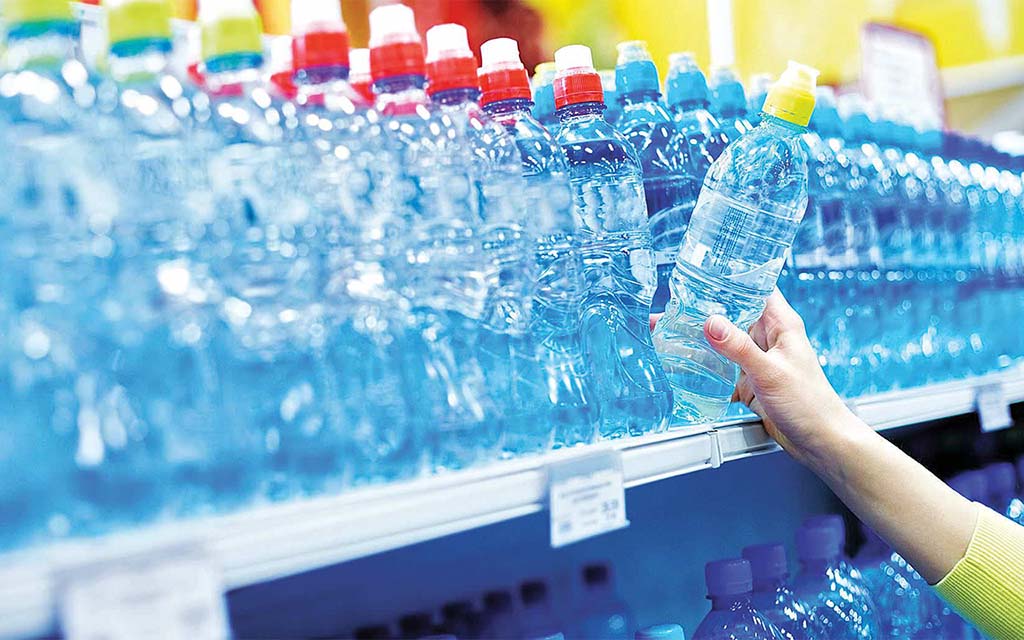 The green consumer trend and sustainable development are posing a new challenge for the plastics industry (Illustration image from the internet)
Pioneering Businesses in Sustainable Development
In the global pursuit of sustainable development, a growing number of businesses have proactively spearheaded innovative solutions. These include transitioning to environmentally friendly, biodegradable plastic materials (PET) for production, with successful exports to major international markets, including the EU. Other enterprises have invested in cutting-edge modern technology and effectively implemented the circular economy model, emphasizing the recycling and reuse of plastic waste to significantly reduce pollution and contribute to broader sustainable development goals.
Implementing solar power in plastic manufacturing, either through direct installation of a solar power system at a plastic factory or by leveraging the PPA model (Power Purchase Agreement) to access clean energy in the manufacturing process without upfront capital expenditure, is an increasingly attractive option for many plastic companies. Entities like Mekong Plastics, Thai Duong Plastics, Tien Phong Plastics, Duy Tan Plastics, and Rang Dong Plastics are among those who have pioneered the renewable energy adoption in the plastics industry for their facilities, demonstrating a commitment to reducing carbon footprint with solar.
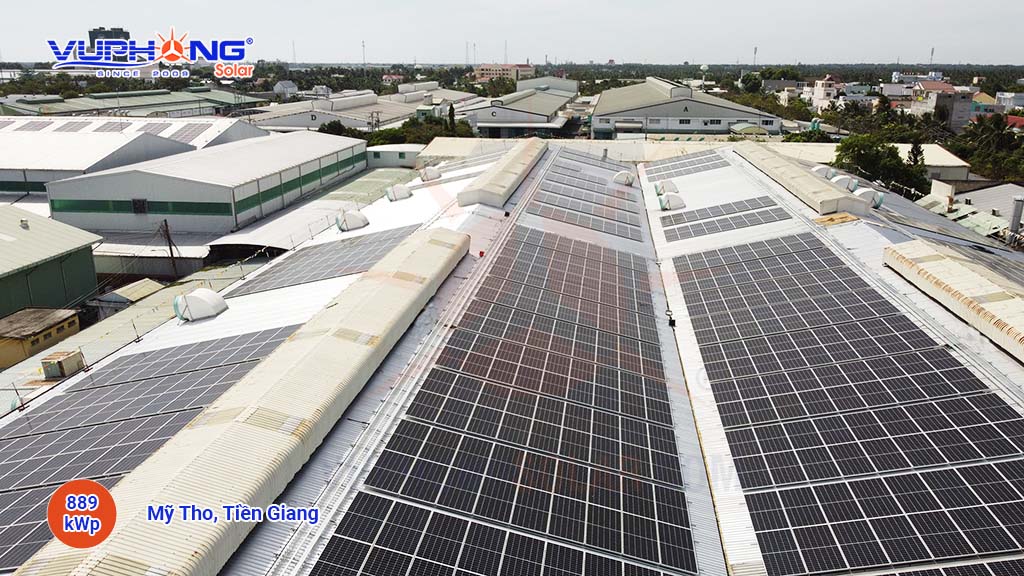 Solar power system on the roof of a plastic factory installed by Vu Phong Energy Group
Vu Phong Energy Group constructed and installed the aforementioned solar power system for a prominent manufacturer of reusable plastic packaging in Vietnam. With over 15 years of operational experience, this enterprise boasts a significant customer and partner base across the United States and Europe. A solar power system was specifically installed at one of the company’s three plants, located in Tien Giang. The project utilizes 1,998 high-efficiency 450Wp solar panels, 10 SMA 75KW grid-tie inverters, high-quality auxiliary frames, and wiring designed for a 30-year lifespan. A distinguishing feature of this project is its implementation via the PPA model (Power Purchase Agreement), a solution gaining considerable interest from businesses as a strategic pathway for “greening” production. Readers can learn more about the PPA model for solar power.
The global green consumer trend is rapidly gaining momentum, and Vietnam is no exception. For businesses to thrive and achieve breakthroughs, a crucial focus must be on investing in production processes that yield “green” and “clean” products, alongside developing a strong eco-friendly brand intrinsically linked to sustainable development. The proactive efforts of many plastic businesses — investing in and installing solar power systems, embracing clean energy solutions in production, deploying modern technologies and environmentally friendly materials, and prioritizing recycling initiatives — collectively represent a highly positive indicator for the continued evolution of the plastic industry’s development, and indeed, for Vietnam’s industrial growth as a whole. This proactive approach also underscores businesses’ heightened awareness of the importance of fostering a healthy business environment, aligning corporate interests with community well-being, and diligently protecting our shared living environment through eco-friendly production in plastic factories and demonstrating how solar power is greening plastic factories.
Vu Phong Energy Group
Recent Posts
-
Vũ Phong Magazine – September 2026: Strategic Partnerships and Green Energy Transition in Focus
-
C47 Inaugurates Representative Office in Laos and Announces the Establishment of C47 Energy Laos: A Strategic Milestone in Its International Expansion
-
Solar Energy Businesses Strengthen Cooperation to Expand the Renewable Energy Solutions Ecosystem
-
 Energy is becoming a new competitive advantage for manufacturing businesses
 -
Vũ Phong Energy Group Advances Energy Infrastructure for the AI and Data Center Era On July 29, as part of the Vietnam Global Innovation Connect 2026 (VGIC 2026), Vũ Phong