Footwear Green Standards are increasingly becoming a critical factor for success in the global market. For Vietnamese footwear businesses, which play a significant role in the international supply chain, aligning with these standards is no longer just an option but a strategic necessity. The global shift towards sustainable production and consumption presents both challenges and immense opportunities. By proactively adopting green manufacturing processes and adhering to stringent international regulations, Vietnamese enterprises can leverage their advantages from Free Trade Agreements (FTAs), particularly with the European Union. This commitment not only secures existing market share but also unlocks new growth prospects, solidifying Vietnam’s position as a leader in sustainable footwear manufacturing for years to come.
Vietnam’s Footwear Sector: A Global Powerhouse with Room to Grow
Vietnam has firmly established itself as a dominant force in the global footwear market, ranking second in the world for exports, surpassed only by China. In terms of manufacturing output, the nation holds the third position, following China and India. The country’s leather and footwear enterprises have skillfully utilized the benefits of FTAs, which have provided the momentum needed to navigate challenges and achieve a robust recovery in the post-pandemic era. In the first seven months of the year alone, footwear exports surged to 14 billion USD, a 13% increase compared to the same period last year. This growth was particularly strong in key international markets, including a 24% rise in North America and a 17.5% increase in the European Union (EU).
According to the “Research Report on Footwear Industry in Vietnam, 2022-2031” by the renowned market research firm Research and Markets, this upward trend is set to continue. The report highlights that global footwear giants Nike and Adidas have designated Vietnam as a primary manufacturing hub. This strategic shift is part of a broader trend of supply chains moving from China to Vietnam, driven by competitive advantages. Currently, Nike collaborates with over 100 suppliers in Vietnam, 96 of which are concentrated in the southern region. Similarly, by 2021, Vietnam was responsible for approximately 40% of Adidas’s total footwear production worldwide.
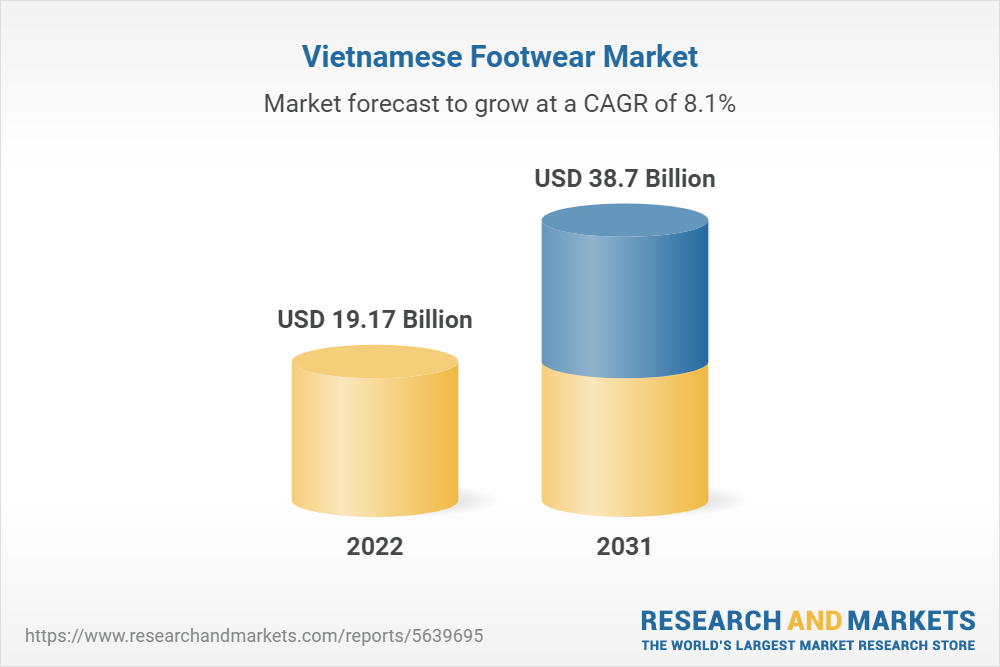 The Vietnam footwear market is projected to grow at a compound annual growth rate (CAGR) of 8.1% between 2022 and 2023. Image source: Research and Markets.
The Irreversible Shift Towards Greening in Production
The global paradigm of sustainable production and consumption is gaining significant momentum. Today’s consumers are more discerning than ever, showing a clear preference for products that are green, clean, and environmentally friendly. This consumer-driven movement has spurred the creation of new environmental laws that place strict requirements on manufacturing organizations, including those in the footwear sector, to uphold high standards of environmental stewardship and social responsibility. This forms a core part of the modern sustainable development foundation for any successful business.
A landmark piece of legislation in this area is the German Supply Chain Due Diligence Act, passed in 2021. This act mandates that companies rigorously adhere to human rights and specific environmental due diligence protocols within their supply chain management. Scheduled to take effect on January 1, 2023, this legislation is expected to have a profound impact on the footwear industry’s supply chain dynamics, especially for products intended for the EU market.
Despite these stringent requirements, Vietnam’s footwear products have a competitive edge when exporting to the EU, benefiting from a tax differential of 3.5% to 4.2% compared to rivals. The tariff reductions and eliminations under the FTA have allowed Vietnam’s leather and footwear products to capture over 80% of the market share in this region. Consequently, many forward-thinking enterprises are focusing on adapting to and complying with green standards and rules of origin to maintain this advantage.
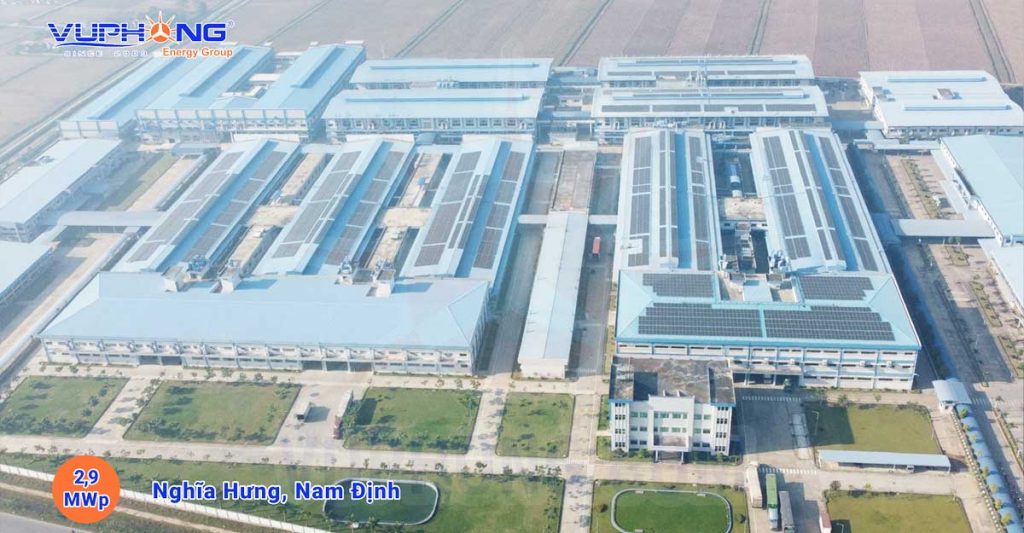
Industry experts predict that the focus on sustainable consumption will only intensify. Consumers will demand greater material traceability, the use of recycled materials, and manufacturing processes that minimize carbon emissions and environmental impact. This is a primary driver for the industry’s green transition. Many businesses are now choosing to compete on environmental standards rather than on low labor costs. Leading enterprises are actively investing in 4.0 technology, adopting smart factory management, developing facilities to produce recycled materials, and utilizing clean energy solutions like solar power to enhance productivity and improve working conditions.
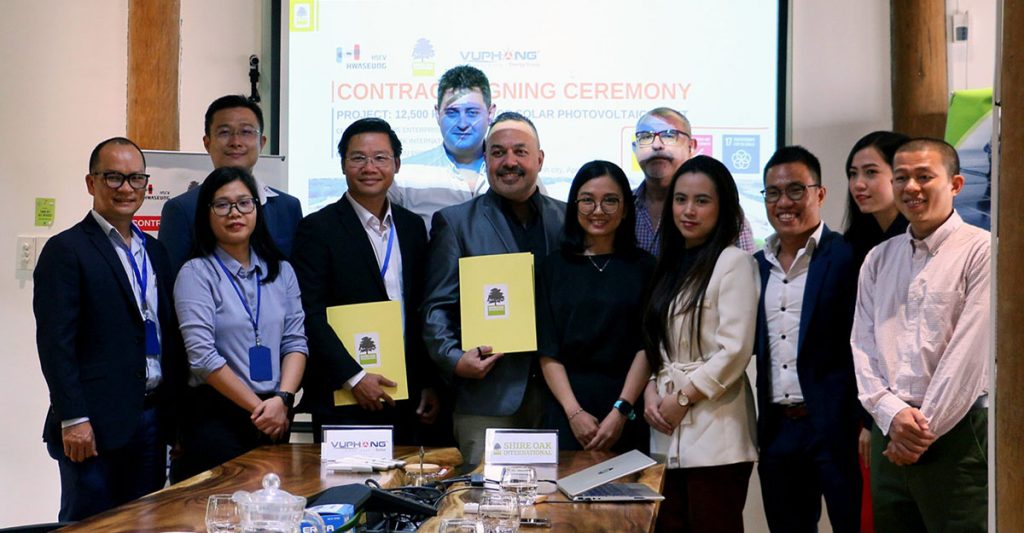 Vu Phong Energy Group is implementing a series of rooftop solar power systems totaling over 12.5 MWp on factory roofs for Hwaseung Enterprise Group (Korea).
The transition to “greening” production to meet export standards is not limited to the footwear industry; it is a widespread trend affecting sectors such as textiles, plastics, and agricultural products. As sustainability becomes the norm, any business wishing to remain competitive must adapt. Identifying this shift and acting swiftly presents an opportunity for companies to not only survive but also to thrive and achieve long-term, sustainable growth. You can also Read the original Vietnamese version of this article for more local context.
|
Businesses interested in clean energy solutions to greening production, towards sustainable development, please contact Our Call Center via 1800 7171 or +84 9 1800 7171 or send an email to hello@vuphong.com for more information. More information:
|
Vu Phong Energy Group
Recent Posts
-
Vũ Phong Magazine – September 2026: Strategic Partnerships and Green Energy Transition in Focus
-
C47 Inaugurates Representative Office in Laos and Announces the Establishment of C47 Energy Laos: A Strategic Milestone in Its International Expansion
-
Solar Energy Businesses Strengthen Cooperation to Expand the Renewable Energy Solutions Ecosystem
-
 Energy is becoming a new competitive advantage for manufacturing businesses
 -
Vũ Phong Energy Group Advances Energy Infrastructure for the AI and Data Center Era On July 29, as part of the Vietnam Global Innovation Connect 2026 (VGIC 2026), Vũ Phong