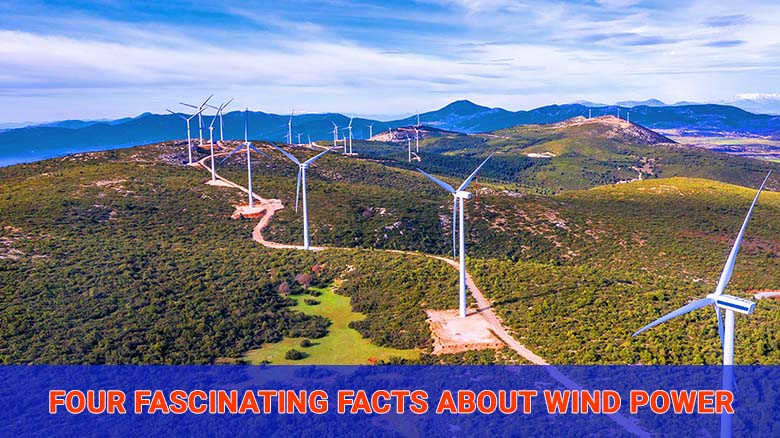
Humans have used wind energy for transportation and manufacturing for hundreds of years. With a total capacity of 743 GW by the end of 2020, wind power has established itself as one of the most significant energy sources in the global energy system. However, there are many fascinating facts regarding this clean energy source that you may not be aware of.
Wind energy electricity and the first turbine in wind power history
Wind energy is one of the oldest methods of obtaining sustainable power from the natural environment, dating back to using wind power to propel sailing ships. After the discovery of electricity and generators, the concept of utilizing wind for electricity generation emerged, marking a significant step in energy innovation.
In 1887, a Scotsman named James Blyth built the first wind power generation system. This pioneering setup featured a solid vertical shaft 10 meters high and four propellers, successfully providing electricity for his residence during his vacation.
Charles Francis Brush, an American engineer and inventor, further advanced the field by developing a large windmill in 1888 that generated electricity to power his house in Cleveland, Ohio. This innovation had a power output of 12 kW. Windmills that generated electricity subsequently became known as “wind turbines.”
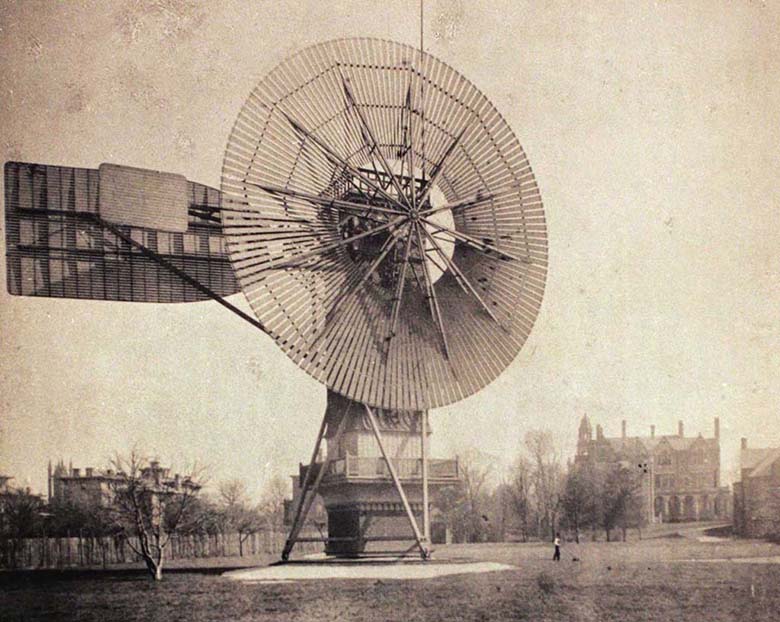 Windmills, which were created in 1888 by Charles Francis Brush, are used to generate energy (Internet photo)
Wind turbines first appeared in Europe in the twentieth century and subsequently expanded around the world. Today, wind power has firmly established itself as a significant renewable energy source within the global energy system. The entire global wind power capacity reached 743 GW by the end of 2020, demonstrating its critical role in delivering clean energy. Continued advancements in optimizing wind power operations are key to achieving even greater efficiency and widespread adoption.
Three-bladed, two-bladed, multi-bladed, and… turbine with no blades
Wind turbines are broadly classified into two main types: vertical axis wind turbines and horizontal axis wind turbines. Horizontal axis wind turbines with three blades are widely utilized today and have become the most common imagery associated with wind power. However, the structure of wind turbines is quite varied, with numerous design variations; the number and form of propellers also differ significantly by model.
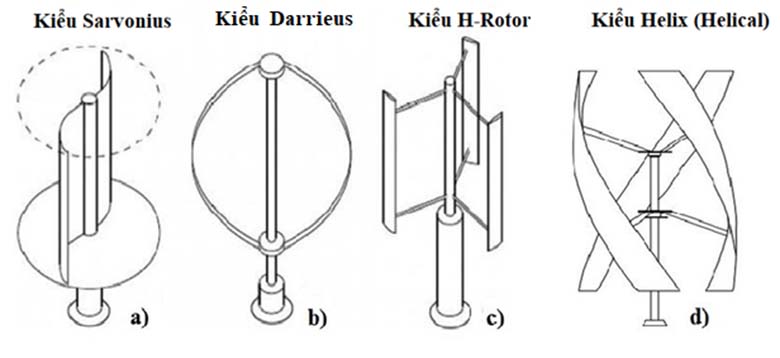 Vertical axis wind turbines of various types (Internet photo)
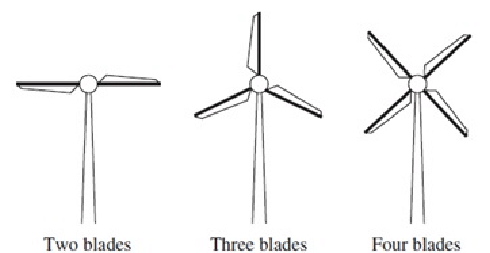 Horizontal axis wind turbines of various types (Internet photo)
Beyond wind turbines with two, three, or even multiple blades, researchers are also developing innovative designs, including wind turbines with… 0 propellers (and only a single tower) to generate electricity. Instead of using the wind to rotate blades as traditional turbines do, this type of turbine generates clean energy through the motion and friction caused by the air impacting the oscillating pole.
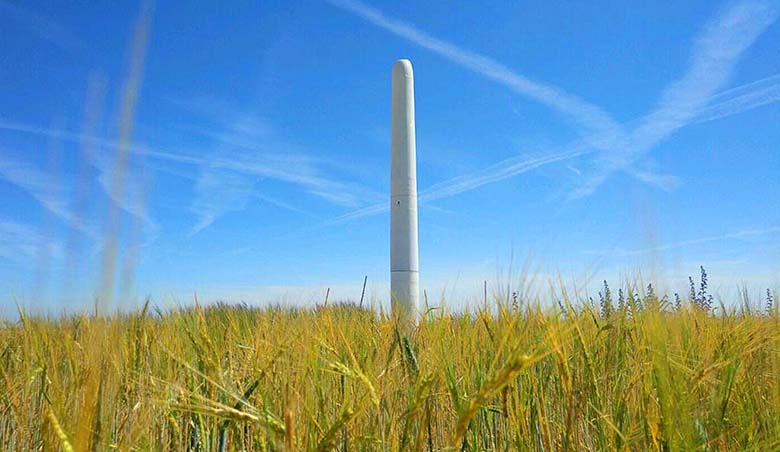 Wind turbines without blades (Internet photo)
The world’s most enormous wind turbine capacity
Initially, each wind power tower typically had a 50-100 kW capacity. This expanded to 300-500 kW in the 1990s, and subsequently to 1.5-3.5 MW in the early twenty-first century. Many currently installed wind turbines now boast a significant wind turbine capacity of 9.5-10 MW, reflecting rapid energy innovation.
The Haliade-X turbine, developed by General Electric, is currently recognized as the world’s largest-capacity wind turbine. According to its original design, the Haliade-X turbine has a capacity of 12 MW, with each revolution of its propeller capable of generating enough electricity to power a family for two days. This remarkable machine was later upgraded to 13 MW and then to 14 MW capacities for deployment in the world’s most enormous offshore wind generating project, Dogger Bank (the turbine capacity was upgraded to 13 MW in phase 1-2, and will further increase to 14 MW in phase 3 of this project), showcasing continuous advancements in wind power technology.
Video Introducing Haliade-X (Source: GE Renewable Energy)
There are about 57,000 patent applications.
According to research by the Industrial Property Information Center, examining data from January 1, 2006, to April 2020, based on WIPO’s international patent classification (IPC), reveals a robust landscape of wind energy patents. In the global wind energy industry, approximately 56,879 patent papers were discovered, with 39.2 percent having been granted patents, underscoring significant energy innovation. General Electric (GE), Vestas Wind Systems, and State Grid Corporation of China stand as the top three patent holders. General Electric leads with 1,104 patent categories, followed by Vestas Wind Systems with 592, and State Grid Corporation of China with 590. Vietnam has 77 wind energy patent applications. This clearly indicates that China, the United States, and the European Union are the leading nations and regions in wind energy technology development, holding the most patent applications in this vital sector.
These are four fascinating facts regarding wind power and wind energy. Vu Phong Energy Group is committed to bringing you many more intriguing insights about wind power plants, wind turbines, and this crucial renewable energy source in future postings, contributing to the understanding of clean energy development.
Vu Phong Energy Group
Read more:
Recent Posts
-
Vũ Phong Magazine – September 2026: Strategic Partnerships and Green Energy Transition in Focus
-
C47 Inaugurates Representative Office in Laos and Announces the Establishment of C47 Energy Laos: A Strategic Milestone in Its International Expansion
-
Solar Energy Businesses Strengthen Cooperation to Expand the Renewable Energy Solutions Ecosystem
-
 Energy is becoming a new competitive advantage for manufacturing businesses
 -
Vũ Phong Energy Group Advances Energy Infrastructure for the AI and Data Center Era On July 29, as part of the Vietnam Global Innovation Connect 2026 (VGIC 2026), Vũ Phong