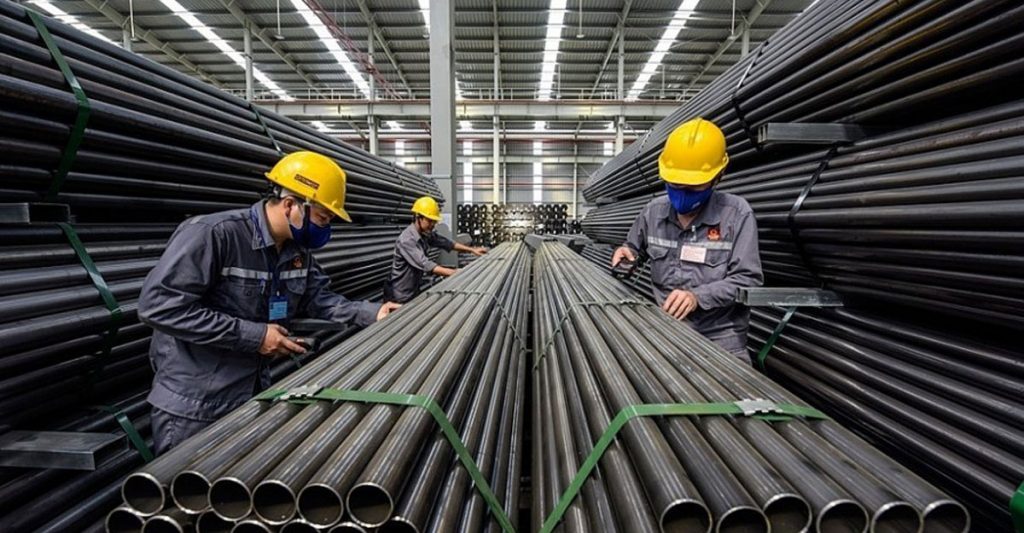
The European Union’s CBAM (Carbon Border Adjustment Mechanism) is set to reshape international trade, with its transitional phase beginning on October 1, 2023. This critical environmental trade policy introduces carbon taxes on imported goods entering the EU, based on their production-related greenhouse gas emissions. For Vietnamese businesses, particularly those heavily involved in export sectors such as steel, aluminum, and cement, understanding and proactively adapting to CBAM is not merely a compliance issue but a strategic imperative for sustained competitiveness in the global market. This article outlines the mechanism’s timeline, identifies urgent challenges for affected industries, and proposes practical adaptation strategies.
What is the Carbon Border Adjustment Mechanism (CBAM)?
The European Union’s Carbon Border Adjustment Mechanism (CBAM) represents a landmark environmental trade policy designed to impose carbon taxes on goods imported into the EU market. These taxes are directly correlated with the greenhouse gas emissions intensity during the production process in the goods’ country of origin. This mechanism is a cornerstone of the EU’s ambitious target to achieve carbon neutrality by 2050, aiming to level the playing field by balancing the carbon price between domestically produced and imported products.
A primary objective of CBAM is to prevent “carbon leakage,” a scenario where EU businesses might relocate high carbon-emitting production activities to countries with less stringent environmental regulations. The EU firmly believes that by applying a green mechanism, such as a carbon pricing system, to imported goods, it will actively encourage cleaner industries and sustainable production practices in non-EU countries. Under this robust framework, importers bringing goods into the EU are mandated to register with national regulatory authorities and acquire CBAM emission certificates if the embedded emissions in their imported products surpass EU standards. The price of these certificates will be determined by the weekly emission permit prices set by the EU Emissions Trading System. Importers are required to declare the emission content of their imported goods and submit the corresponding number of certificates annually. Crucially, if importers can substantiate that carbon prices have already been paid during the production of those goods in their origin country, these corresponding emissions can be duly deducted, ensuring fairness and avoiding double taxation.
As such, the European Union stands as the world’s pioneering trading region to implement carbon pricing on imported goods, setting a significant precedent for global environmental policy and sustainable trade practices.
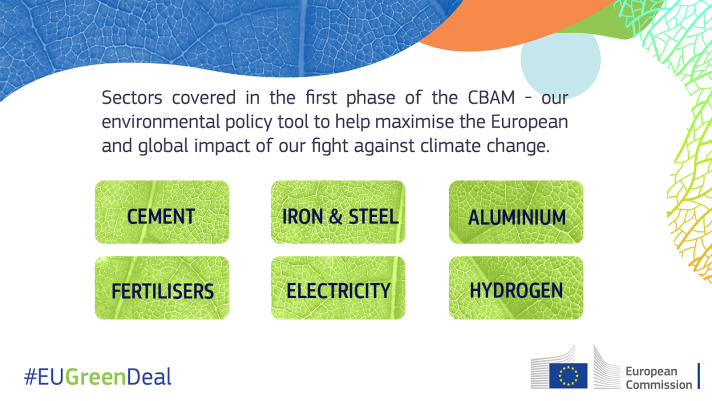 The impact on 6 key industries: cement, iron & steel, aluminum, fertilizers, hydrogen, and electricity (Image: EC)
The CBAM implementation timeline
The implementation of the Carbon Border Adjustment Mechanism (CBAM) is structured into three distinct phases:
The **Transition Phase** spans from October 1, 2023, until the end of 2025. During this period, importers are primarily responsible for reporting on goods that fall under CBAM’s scope. The inaugural reporting deadline for importers is January 31, 2024. Significantly, no financial payments or adjustments are required from EU importers during this initial phase. CBAM’s initial focus is on product categories identified as having the highest risk of carbon leakage, which include cement, iron and steel, aluminum, fertilizers, hydrogen, and electricity. These sectors collectively contribute up to 94% of the EU’s industrial greenhouse gas emissions. Towards the conclusion of this phase, in 2025, the European Commission (EC) will conduct a thorough evaluation of CBAM’s performance, potentially leading to an expansion of its scope to encompass additional products, services, value chains, and possibly indirect emissions.
The **2026-2034 Phase** marks the beginning of CBAM’s operational period. From this point, EU importers of goods within CBAM’s jurisdiction will be mandated to purchase CBAM certificates. Annually, before May 31, EU importers must declare the quantity of goods and their associated emissions imported in the preceding year. Concurrently, importers are required to submit the corresponding number of CBAM certificates for the greenhouse gas emissions embedded in these products. During this phase, the EU will progressively reduce and eventually phase out the allocation of free greenhouse gas emission permits, further tightening the carbon pricing system.
**From 2034 onwards**, CBAM will become fully operational. By this stage, businesses will be obliged to submit 100% of the required CBAM fees, signifying the complete integration and enforcement of the mechanism across all targeted imports.
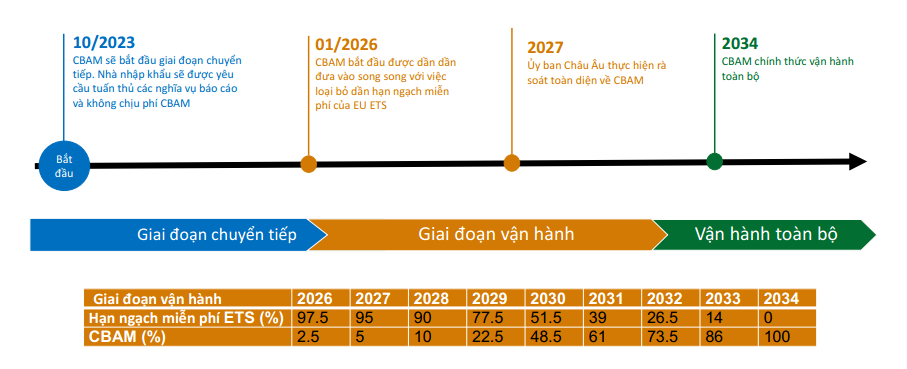 CBAM implementation timeline (Image: Vietnam Economic News)
Urgent challenges for affected industries
The initial industries slated for impact by CBAM include cement, iron and steel, aluminum, fertilizers, hydrogen, and electricity. In Vietnam, four of these sectors are significant exporters to the EU market: aluminum, steel, cement, and fertilizers. Notably, products made from iron and steel alone constitute an impressive 96% of the export value within these four categories. For instance, in the first half of this year, Vietnam exported over 1.36 million tons of steel to Europe, marking a substantial nearly 34% increase compared to the same period in 2022, and accounting for approximately 21% of the country’s total steel export structure. This growing trade volume underscores the critical challenges ahead.
Consequently, CBAM presents a formidable new challenge for businesses in these export-oriented industries, particularly the steel sector. If Vietnamese steel manufacturers do not swiftly devise and implement plans to reduce their carbon emissions, their export products risk facing intense competition and potential market share erosion in the EU. The World Trade Organization (WTO) projects that the steel industry could experience a 4% reduction in export value due to CBAM’s impact. Such reduced demand is anticipated to lead to an approximate 0.8% decrease in production, alongside other adverse effects on market competitiveness.
Furthermore, a World Bank assessment from May 2021, which analyzed the carbon tax’s impact on countries including Vietnam, Thailand, and India, estimated that CBAM’s carbon tax could escalate annual costs by an alarming $36 billion for three key products: steel, cement, and aluminum, which Vietnam exports to the European market. These figures highlight the significant financial and competitive pressures Vietnamese businesses must prepare for.
A new challenge for all businesses in the international market
The Carbon Border Adjustment Mechanism (CBAM) stands as a paramount concern for Vietnamese businesses, primarily because the EU represents a highly attractive market. This appeal is driven by the EU’s robust purchasing power and the significant advantages offered by the EU-Vietnam Free Trade Agreement (EVFTA). Statistics reveal that within the initial two years of EVFTA’s implementation (August 2020 to July 2022), Vietnam’s total exports to the EU reached $83.4 billion, averaging $41.7 billion annually. This marks a remarkable 24% increase over the average export value from 2016 to 2019, demonstrating the market’s importance.
Moreover, the scope of CBAM is not static; it could potentially expand to cover an even broader range of products and services after the European Commission (EC) conducts its operational assessment in 2025. This prospective expansion reinforces the notion that global regulations and criteria are becoming increasingly stringent, forging a close link between economic activities, international trade, and overarching goals of environmental protection, climate adaptation, and carbon neutrality. Industry experts widely anticipate that in the foreseeable future, other major countries and markets, such as the United States, Japan, and South Korea, may adopt similar policies and mechanisms, broadening their coverage across various product categories. Therefore, Vietnamese businesses operating in the international market, across diverse sectors including textiles, plastics, leather and footwear, and wood products, must proactively adapt to these emerging trends and undertake necessary preparations in their production strategies and planning.
For complex product categories, it is particularly important to note that the EU will factor in emissions from input materials. This necessitates that businesses undertake thorough accounting and reporting of input materials across all stages of production, transportation, and consumption, extending beyond just the manufacturing process itself. To embark on this essential green transition journey, businesses can commence by investing in cleaner production technologies and practices, diligently implementing energy-saving measures, and integrating renewable energy sources, such as solar power. These proactive steps are crucial for reducing production costs, lowering product carbon emissions, meeting stringent green standards, and ultimately enhancing long-term competitiveness in a rapidly evolving global marketplace.
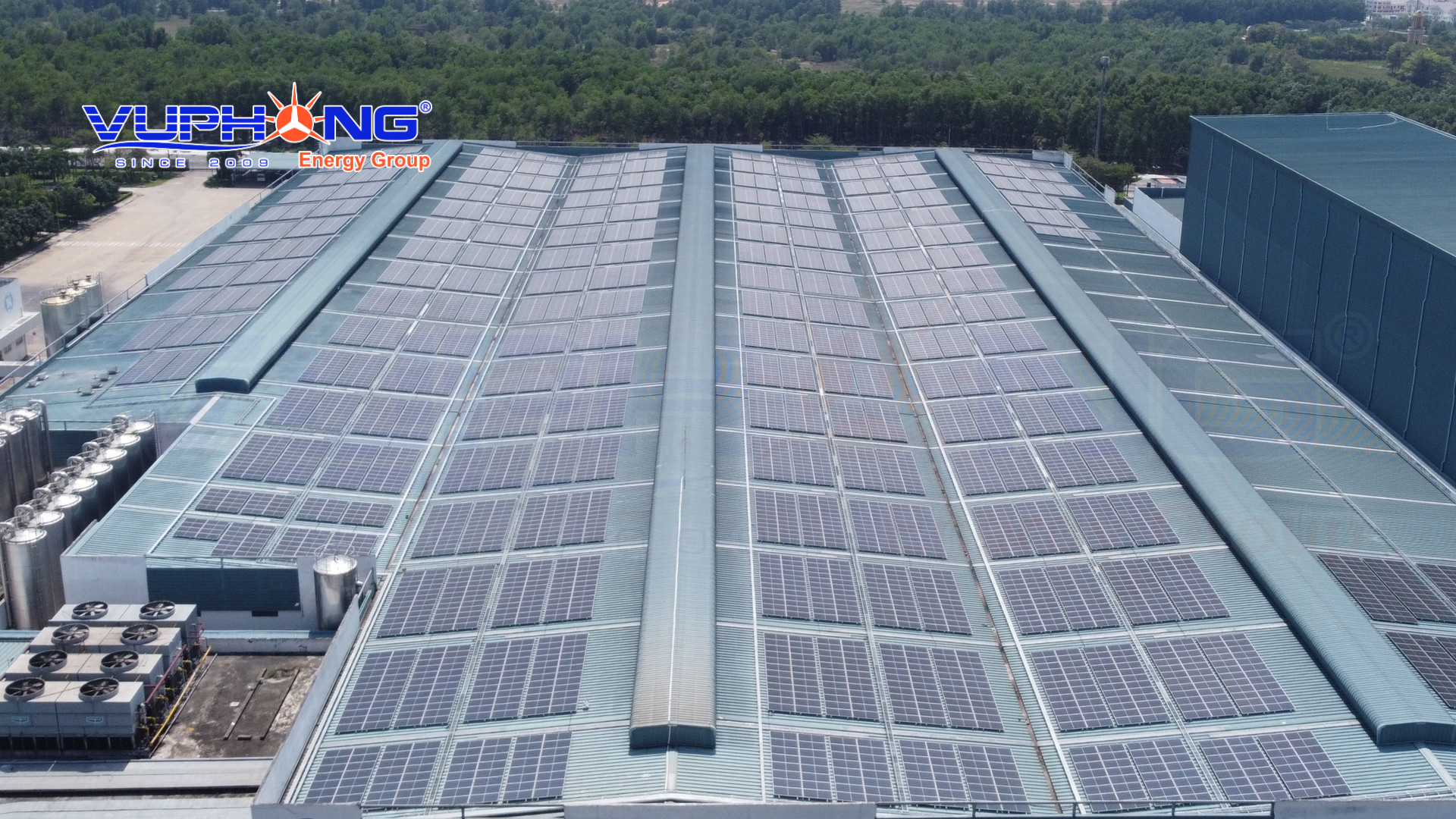 Green transformation: the essential pathway for businesses in the new trend
Shifting to green manufacturing is not merely vital for individual businesses but is equally crucial for the entire supply chain. When a supplier successfully reduces its emissions, the businesses connected within that supply chain move closer to achieving their Net Zero and broader emission reduction objectives. When a network of companies actively collaborates to diminish emissions and attain carbon neutrality, they collectively secure a significant competitive advantage in the international market, transforming the common challenge of carbon taxes into tangible opportunities for sustainable growth.
|
As a leading renewable energy company in Vietnam, Vu Phong Energy Group specializes in developing solar power solutions. We are actively walking alongside many businesses on their green transformation journey, helping them effectively reduce emissions, particularly through our Power Purchase Agreement (PPA) model. This flexible cooperation model is a preferred choice for numerous businesses because it effectively addresses common financial concerns. Companies are not required to invest their own capital or manage complex system operations. Instead, they gain access to reliable solar power at a reduced cost and benefit from a free system transfer after the contract period concludes. Many industry-leading companies in Vietnam, including prominent names like Vinamilk, Kem Nghia, Duy Tan, and Dalat Worsted Spinning – DWS, are proactively adopting this innovative solution as an integral part of their green transformation process. Businesses interested in clean energy solutions are encouraged to contact our Call Center via 1800 7171 or +84 9 1800 7171, or through email at hello@vuphong.com for further information. |
Vu Phong Energy Group
Recent Posts
-
Vũ Phong Magazine – September 2026: Strategic Partnerships and Green Energy Transition in Focus
-
C47 Inaugurates Representative Office in Laos and Announces the Establishment of C47 Energy Laos: A Strategic Milestone in Its International Expansion
-
Solar Energy Businesses Strengthen Cooperation to Expand the Renewable Energy Solutions Ecosystem
-
 Energy is becoming a new competitive advantage for manufacturing businesses
 -
Vũ Phong Energy Group Advances Energy Infrastructure for the AI and Data Center Era On July 29, as part of the Vietnam Global Innovation Connect 2026 (VGIC 2026), Vũ Phong