A flexible Rooftop solar power policy is crucial for creating a favorable landscape for investors and manufacturers in Vietnam. An adaptable framework would accelerate the widespread adoption of clean energy solutions, offering the dual advantage of facilitating a greener footprint for businesses while opening lucrative avenues for investment in sustainable energy infrastructure. This policy approach is fundamental to meeting national green energy targets and supporting the ongoing energy transition. The current investment environment has been impacted by policy interruptions, making the call for clear, consistent, and flexible regulations more urgent than ever for stakeholders in the renewable energy market.
The increasing demand for renewable energy is driven by integration requirements, green manufacturing goals, and the need to reduce industrial emissions. However, a prolonged interruption in policy has significantly impacted the business investment environment, affecting export enterprises and investors in renewable energy services. To shed light on this issue, the Business Forum Newspaper spoke with Mr. Tri, Nguyen Quang, CEO of Vu Phong Energy Group.
The Impact of Policy Interruption on Renewable Energy
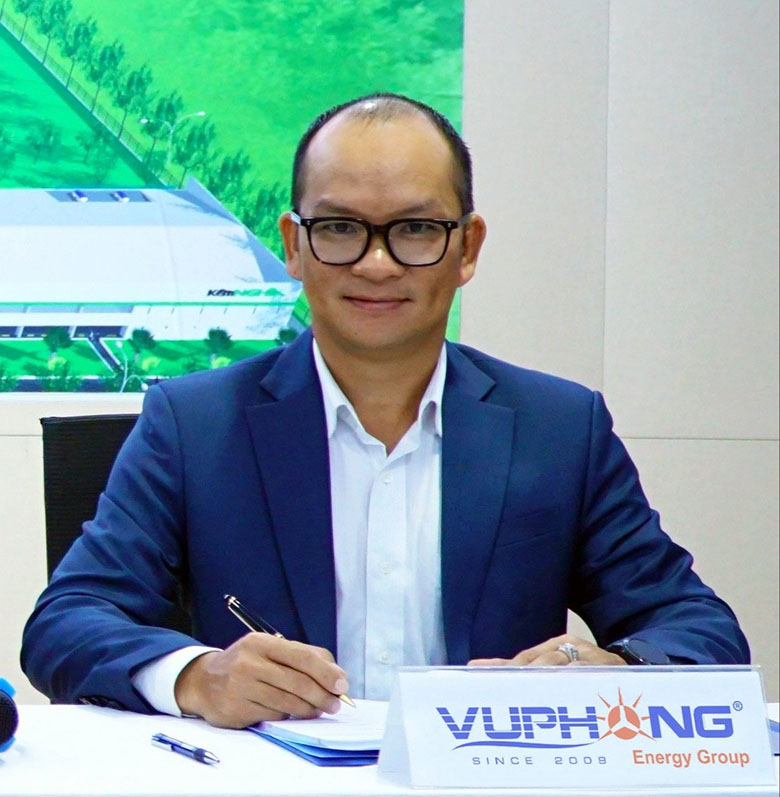 Mr. Tri, Nguyen Quang – CEO of Vu Phong Energy Group
Recommendations for Renewable Energy Policies
From your perspective as an investor and EPC contractor, what is the state of Vietnam’s current renewable energy market?
Vietnam is a leader in renewable energy in Southeast Asia with a vibrant market. As the energy transition is an inevitable trend, the development potential remains significant. Furthermore, Vietnam is committed to achieving net-zero emissions by 2050, a goal set at COP26. Consequently, many foreign banks, organizations, and investment funds are eager to participate in Vietnam’s renewable energy sector. A key driver is that most major global manufacturing corporations have pledged to reach Net Zero by 2050 and now require their suppliers to pursue green production. This compels businesses in Vietnam to transform to remain competitive. At Vu Phong Energy Group, we have accompanied many clients and partners on their journey toward greening production to meet these integration requirements.
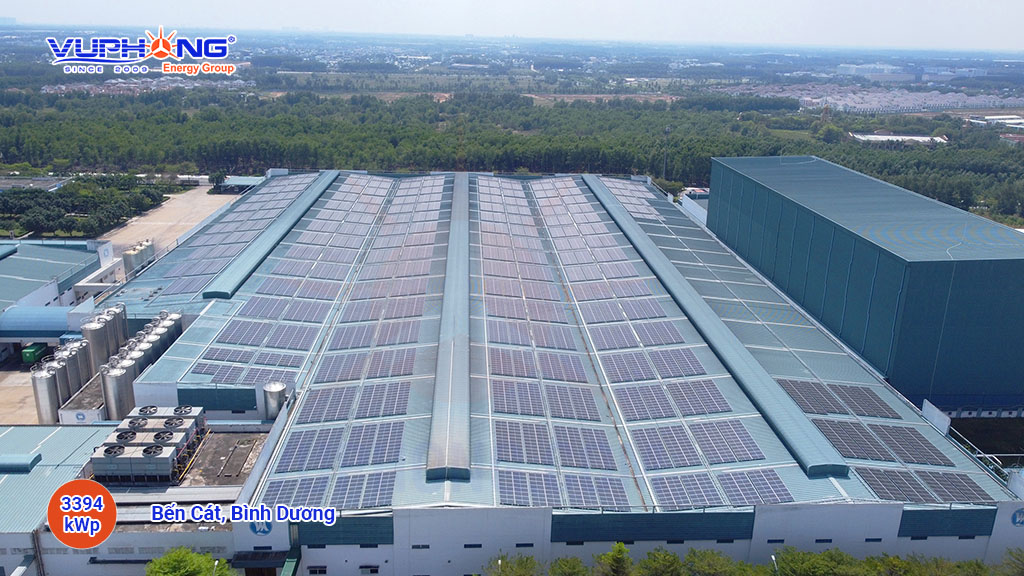 Vu Phong Energy completed a 3394 kWp solar power project at the Vietnam Dairy Factory, one of the most modern automated facilities in the region.
However, the policy gap following the expiration of Decision 13/2020/Q-TTg for solar power and Decision 39/2018/QD-TTg for wind power has created challenges for both investors and renewable energy service providers.
What policy recommendations would you propose for the renewable energy market and rooftop solar power sector in the coming years?
While renewable energy development is encouraged and holds great potential, a clear, transparent, and continuous policy mechanism is urgently needed. This framework must include a specific roadmap to create a stable environment for effective investment. Policies that facilitate the use of clean energy, particularly rooftop solar power, will help businesses meet their environmental commitments and contribute to national emission reduction goals. Many businesses are actively looking to increase their use of renewable energy, with some aiming for 100%. Collaboration models like the Power Purchase Agreement (PPA), often involving foreign investment funds, are popular choices. Therefore, a flexible policy for rooftop solar power—allowing for adaptable capacity based on demand and flexible pricing mechanisms—would benefit both investors and manufacturing enterprises seeking clean energy solutions.
The Role of Flexible Rooftop Solar Power in Sustainable Development
The Draft Power Plan VIII encourages rooftop solar for self-generation and on-site consumption, without exporting to the national grid. What is your assessment of this direction?
In the current context, encouraging the development of rooftop solar power for self-consumption at production and business facilities is essential. However, I believe the policy should be flexible enough to prioritize self-use while accommodating surplus generation. The Ministry of Industry and Trade’s draft on rooftop solar power development is moving in the direction of not limiting capacity but instead proposing a self-use rate. This approach helps ensure the system is distributed, limits transmission stress, avoids power losses, and increases social investment. A reasonable policy could specify a high percentage of on-site self-use, such as 80%, while allowing the remaining 20% of excess generation to be sold. This would ensure the system’s primary purpose is met while preventing wasted electricity.
The current policy gap makes it difficult for many investors and manufacturers to commit to developing clean energy systems, even when they are willing to invest. I am hopeful that a sufficient and synchronized policy framework for renewable energy, and for rooftop solar power in particular, will be available soon.
Thank you!
(Source: Business Forum Newspaper)
Recent Posts
-
Vũ Phong Magazine – September 2026: Strategic Partnerships and Green Energy Transition in Focus
-
C47 Inaugurates Representative Office in Laos and Announces the Establishment of C47 Energy Laos: A Strategic Milestone in Its International Expansion
-
Solar Energy Businesses Strengthen Cooperation to Expand the Renewable Energy Solutions Ecosystem
-
 Energy is becoming a new competitive advantage for manufacturing businesses
 -
Vũ Phong Energy Group Advances Energy Infrastructure for the AI and Data Center Era On July 29, as part of the Vietnam Global Innovation Connect 2026 (VGIC 2026), Vũ Phong